North Texas winters are mild most of the time — and then a cold front drops in, the temperature falls below freezing, and everyone’s heater runs for days straight. A little prep in the fall keeps your home warm, your bills sane, and your furnace or heat pump from quitting on the coldest night of the year. Here are ten practical steps for a Forney home.
Why winterizing matters here in North Texas
It’s easy to assume winterizing is for folks up north. But Kaufman County sees real cold snaps and hard freezes most years, often arriving fast after a stretch of warm days. Because our winters are usually mild, a lot of homes here don’t get the same attention to drafts, pipe protection, and heating upkeep that colder climates take for granted. That’s exactly why a freeze catches people off guard. The good news is that the steps below are simple, most are free or close to it, and they make a noticeable difference in comfort and cost.
Ten steps to get your home ready
Work through these in order and you’ll cover the things that matter most — your heating system, your home’s envelope, and the safety basics.
- Book a fall heating tune-up. The single best thing you can do. A technician checks the furnace or heat pump, cleans what needs cleaning, tests the safety controls, and catches a worn part before it leaves you cold. Booking in fall means it’s handled on a mild day, not during an emergency. You can set up seasonal tune-ups with us anytime.
- Change the air filter. A fresh filter is the quickest comfort win in the house. A clogged one chokes airflow, makes your system work harder, and drives up the bill. Check it monthly during heavy heating use and swap it when it looks gray and loaded.
- Test the furnace or heat pump early. Don’t wait for the first freeze to find out something’s wrong. On a cool fall day, run the heat and let it cycle a few times. A little burning-dust smell on the first run is normal; persistent odd smells, weak heat, or strange noises are not. If anything seems off, get it looked at while you still have time.
- Set a smart thermostat schedule. Program it to ease back a few degrees when you’re asleep or out, and warm up before you’re home or awake. If you have a heat pump, avoid big setpoint jumps — they can trigger the backup electric heat, which costs more. A steady schedule beats cranking it up and down.
- Reverse your ceiling fans. Most fans have a small switch to run clockwise on low in winter. That pushes the warm air that collects near the ceiling gently back down into the room, so you feel warmer at the same thermostat setting.
- Seal drafts around doors and windows. Run your hand around the frames on a windy day — you’ll feel the cold leaks. Weatherstripping and a door sweep are inexpensive and quick to install, and they take a real load off your heating system.
- Protect exposed pipes. Pipe-freeze awareness is the part Texans skip most. Foam sleeves on exposed pipes in the garage or along exterior walls, covers on outdoor spigots, and disconnected hoses all help. During a hard freeze, a slow drip on a vulnerable faucet keeps water moving.
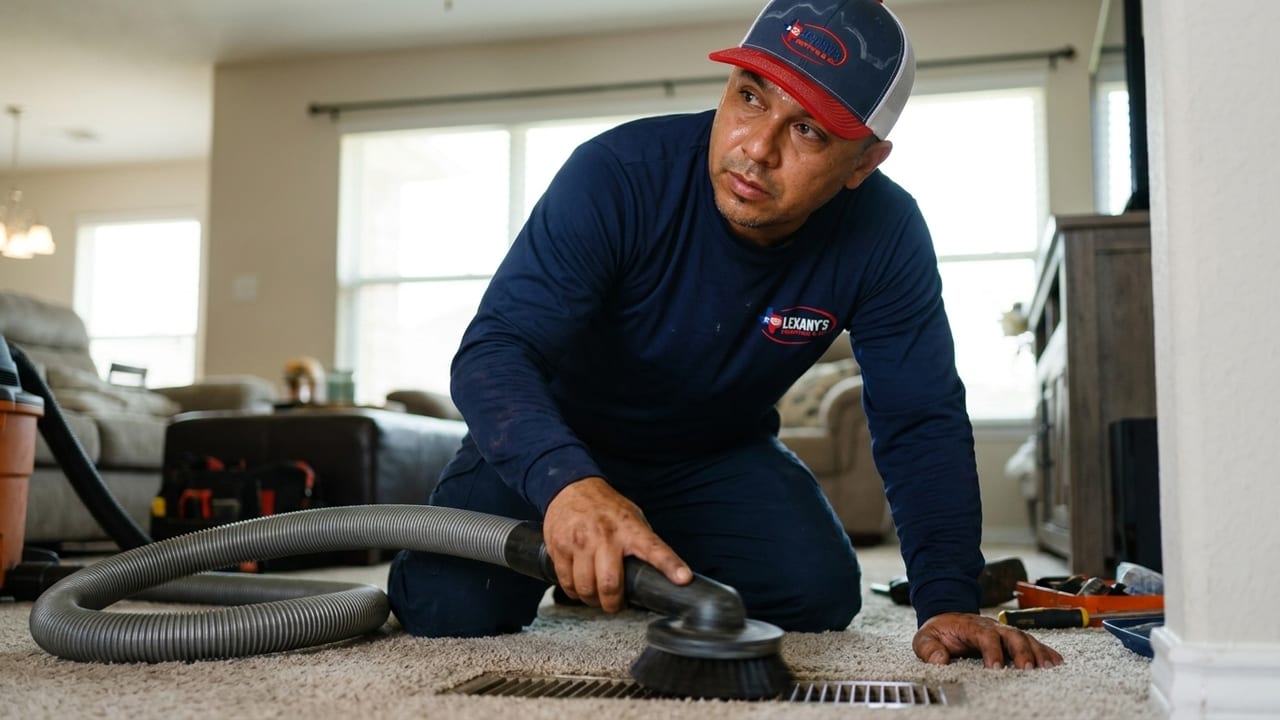
- Keep your supply and return vents clear. Furniture, rugs, and boxes blocking vents force your system to work harder and heat your home unevenly. Walk the house and make sure warm air can actually reach the rooms you use.
- Check the carbon monoxide detector batteries. If you heat with gas, a working CO alarm is not optional. Test every detector, replace the batteries, and confirm none are past their replacement date (most last five to seven years). Daylight-saving weekend is an easy time to remember.
- Know your emergency shutoffs. Before you need them, find your home’s main water shutoff and the gas shutoff for your furnace. In a burst-pipe or suspected-leak situation, knowing where they are — and that you can turn them — saves precious minutes.
Filters, drafts, fan direction, and a thermostat schedule cost almost nothing and you can knock them out in an afternoon. They lighten the load on your furnace or heat pump, which means it lasts longer and uses less energy all winter.
Getting ready for a hard freeze
A Forney winter can sit comfortable for weeks and then drop below freezing for a few brutal days. When the forecast calls for a hard freeze, a few extra moves go a long way:
- Open cabinet doors under sinks on exterior walls so warm air reaches the pipes
- Let a vulnerable faucet drip slowly overnight to keep water moving
- Keep the thermostat at a steady temperature day and night rather than setting it back hard
- Confirm your heat is actually keeping up before the coldest night — not during it
- Replace the filter if it’s dirty, so airflow isn’t fighting you when the system runs hardest
A heat pump especially deserves attention before a freeze. In very cold weather it leans on backup electric heat and may run frost-defrost cycles — both normal, but a system that’s already struggling will show it on the coldest days. If yours isn’t keeping up, it’s worth a look. You can read more about how we approach heating repair if something’s not right.
A gas furnace should never give off a rotten-egg or sulfur smell. If it does, don’t flip switches or light anything — leave the home, then call your gas utility and 911 from outside. Once it’s safe, we can inspect the furnace.
When it’s worth a call to us
Some winter prep is genuinely DIY. The heating side — and anything involving gas or electrical — is where it pays to bring in a licensed tech. Call us if:
- Your furnace or heat pump is short-cycling, blowing cool air, or not keeping the house warm
- You hear grinding, banging, or a burning smell that doesn’t clear after the first run
- The system tripped its breaker or is throwing an error you can’t clear
- You haven’t had a heating tune-up in over a year and want it checked before winter sets in
- You want help making sure an aging furnace or heat pump will make it through the season
We service forced-air gas and electric furnaces and heat pumps for homes across the area — and we’re glad to get ahead of winter with a seasonal tune-up. When you need us, reach a real person at 469-728-7113. We offer same-day service, work in English and Spanish, hold Texas A/C License #51447, and cover Forney plus nearby Kaufman County towns like Mesquite, Terrell, Kaufman, Heartland, Rockwall, Heath, and Kemp.
Winterizing FAQs
When should I schedule a heating tune-up in Forney?
Early fall is ideal — September through early November, before the first real cold snap. Booking ahead of the rush means your furnace or heat pump gets checked while the weather is still mild, so any worn part is found before you actually need the heat. If you’ve already had a cold morning and haven’t had it looked at, it’s still worth calling; we handle most heating calls around Forney the same day.
How often should I change my furnace filter in winter?
For most Forney homes, every 30 to 90 days depending on the filter and whether you have pets. A good habit is to check it monthly during heavy heating use and replace it when it looks gray and loaded. A clogged filter chokes airflow, makes the system run longer, and is one of the most common reasons a furnace or heat pump underperforms in the cold.
Do I really need to worry about freezing pipes in Forney, TX?
Yes — North Texas winters are mild on average, but we get real hard freezes most years, and homes here aren’t always built for them. Exposed pipes in unconditioned spaces, outdoor spigots, and lines along exterior walls are the ones that burst. Insulating them, letting a faucet drip during a deep freeze, and keeping cabinet doors open under sinks all help.
Should I test my heater before winter even if it worked fine last year?
Definitely. Systems sit unused all summer, and the first time you fire the furnace you may smell burning dust or notice it won’t keep up. Testing it on a mild day in fall gives you time to fix anything calmly instead of discovering a problem on the coldest night of the year. Run it, let it cycle, and listen for anything unusual.

Owner of Lexany’s Heating & AC. Family-owned in Forney since 2011 — most days he’s the one on the truck doing the work himself. Bilingual (English/Spanish).