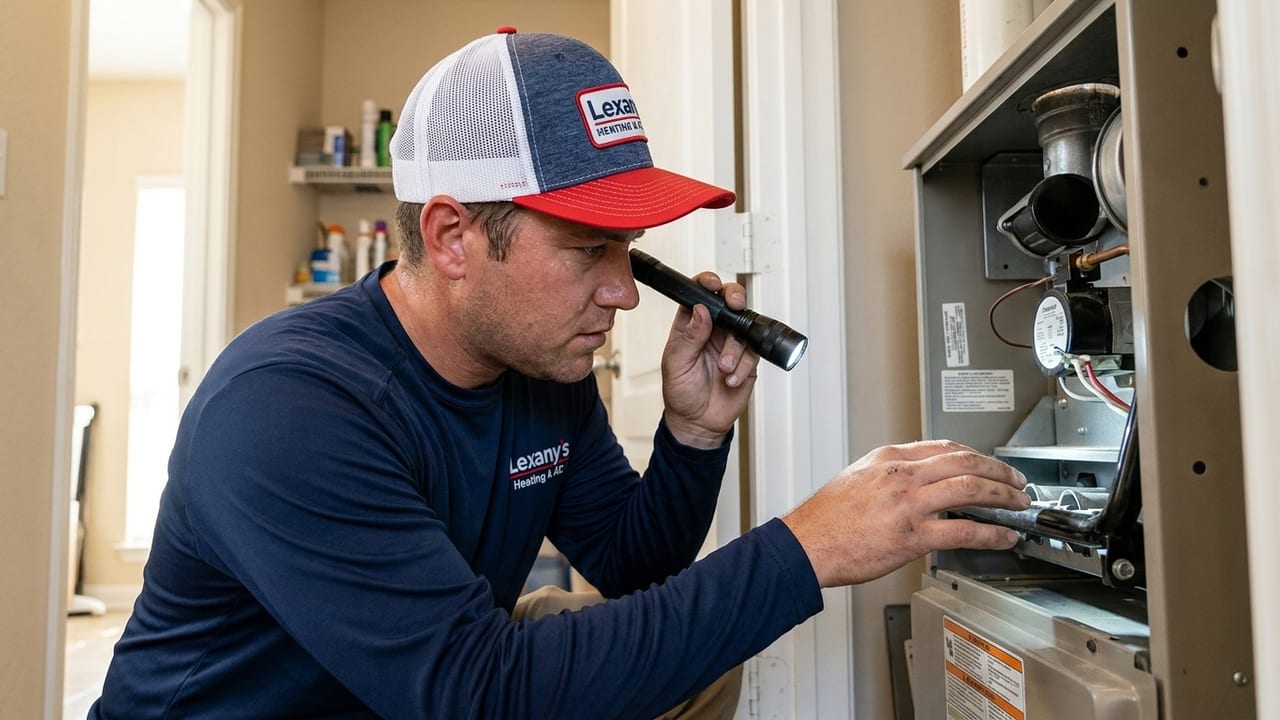
A Forney summer is relentless, and your power bill shows it. The good news: most of the habits that trim an HVAC energy bill cost nothing — or close to it — and have nothing to do with buying new equipment. Here’s what actually makes a difference, in plain order.
Why habits move the needle first
A newer, higher-efficiency system absolutely helps — but even a top-of-the-line unit wastes energy if the habits around it work against it. A dirty filter, a thermostat that gets cranked up and down, and a condenser buried in weeds will each quietly add runtime (and dollars) to any system. Fix the habits first. Then, if there’s still a problem, look at the equipment.
This guide covers the no-cost and low-cost side. If you’re curious about equipment upgrades or what those SEER ratings actually mean, those are separate posts — linked at the bottom. Everything here works with what you already have.
Thermostat: the setpoint trap
The most common energy mistake in a Texas summer is treating the thermostat like a gas pedal. Cranking it to 68° when you want 74° does not cool the house any faster — your AC removes heat at the same rate regardless. All it does is make the system overshoot and run longer. Pick one comfortable setpoint and leave it there.
What a steady setpoint actually does
A system holding a steady temperature works in short, efficient cycles. A system constantly trying to catch up to a moving target runs longer, pulls more power, and removes less humidity — which is what makes a Forney summer feel genuinely uncomfortable. Steady wins.
Setback: worth it or not?
Letting the house warm up while it’s empty (or overnight, within reason) does save energy — the system simply runs less. The trap is letting it drift so high that recovering takes more energy than the setback saved. A smart thermostat handles this automatically, which is the main way it earns its keep. If you’re doing it manually, a modest setback of 4–6° is a reasonable habit; bigger swings tend to cost more to recover than you saved.
Find a setpoint that’s comfortable — most Forney households land somewhere between 74° and 78° — and resist the urge to chase every spike. Consistency costs less than correction.
Start with the filter
A clogged air filter is the single most common reason an otherwise healthy system runs long and costs more. The filter’s job is to protect the equipment from dust; when it gets packed solid, it chokes the airflow the whole system depends on. The coil can’t shed heat properly, the blower works harder, and the system runs longer — for the same result you’d get with a clean one.
Check yours monthly from May through September. In a Forney summer — with heat, dust, and a system running nearly nonstop — monthly is the right interval. Homes with pets or anyone with allergies can make it a year-round habit. It’s a few minutes and a few dollars, and it has a more direct effect on your bill than most “upgrades” anyone will try to sell you.
Fans and blinds: feel cooler for free
Here’s a pairing that actually works: close the blinds on the sunny side of the house, run ceiling fans in occupied rooms, and raise the thermostat setpoint by a degree or two. The result is the same comfort level with less AC running time.
Ceiling fans
A ceiling fan doesn’t lower the temperature — it creates a wind-chill effect that makes you feel a couple of degrees cooler. That’s useful only if you take the trade: raise the thermostat to match, and the system runs less. Turn fans off when the room is empty — they cool people, not rooms, and running them in empty rooms just wastes the motor’s electricity.
Blinds and window coverings
South- and west-facing windows pour radiant heat into a home during afternoon hours. Closing blinds or pulling curtains on those windows on a hot afternoon measurably reduces the heat the system has to remove. It takes about five seconds and costs nothing.
Keep the outdoor unit breathing
Your outdoor condenser’s job is to dump the heat it pulled from inside your home into the outdoor air. It can’t do that well if it’s hemmed in by shrubs, buried in grass clippings, or coated in dust and cottonwood. You don’t need to hose it down constantly — but a quick visual check every few weeks in summer is worth it.
Keep about two feet of clearance around the unit. If there’s heavy debris against the fins after a storm, carefully brush it off or rinse with a gentle hose (not a pressure washer — the fins bend easily). It’s one of the few outdoor maintenance items a homeowner can handle safely without tools.
Seal obvious leaks
Hot outside air sneaking in is work the system didn’t budget for. You don’t need a full energy audit to catch the obvious ones: check the weatherstripping around exterior doors (the light test — hold a flashlight at the edge on a dark night and see if light bleeds through), and look for gaps around window frames, dryer vents, or pipe penetrations through exterior walls.
A tube of weatherstripping or a can of expanding foam runs a few dollars. The bigger structural items — sealed ductwork and a tighter building envelope — are the kind of thing where the savings are real but the job is best left to a pro and covered in a separate conversation. The quick wins here are truly quick.
Seasonal tune-ups: stay at rated efficiency
Every HVAC system is built to run at a rated efficiency — but it only hits that number if the coil is clean, the refrigerant charge is correct, and the airflow is unobstructed. Deferred maintenance lets all three drift, and the system quietly works harder than it has to, month after month, to produce the same result.
A seasonal tune-up before summer starts is the one item on this list that has a direct, measurable effect on efficiency — and it’s not glamorous enough for anyone to oversell it. We do honest, one-time seasonal tune-ups — not a contract you’re locked into. A spring visit is typically the best single thing a Forney homeowner can spend on a power bill.
Most of the bill complaints we see have a simple explanation — dirty filter, a coil that’s never been cleaned, or a thermostat that gets cranked every afternoon. Fix those before spending anything on new equipment. If the problem is still there after the basics are solid, then we talk about what the system itself might need.
When behavior isn’t enough
These habits will do a lot — but they can’t fix a system that’s genuinely undersized, a duct system full of leaks, or a unit that’s fifteen years old and limping. If you’ve checked every item above and the bill is still climbing, or the house simply won’t reach the thermostat setting on a July afternoon, that’s worth a conversation.
The guide on which HVAC systems actually lower your electricity bill covers equipment upgrades — what’s worth it, what’s oversold, and what order to tackle things in. And our energy-efficiency ratings post explains the SEER numbers so you can evaluate what you’re actually buying. Those are the structural moves; this post is the foundation they sit on.
The savings habits — in order
- Pick a steady thermostat setpoint and leave it. Stop chasing every temperature spike — it costs more than it saves.
- Check the air filter monthly from May through September. A clean filter is the fastest way to restore a system’s efficiency, and it costs a few dollars.
- Run ceiling fans in occupied rooms and raise the setpoint to match. Same comfort, less runtime. Turn fans off when you leave the room.
- Close blinds on the sunny side during afternoon hours. Less heat in means less heat to remove.
- Keep the outdoor condenser clear. Two feet of clearance; no debris packed against the fins.
- Seal the obvious gaps — weatherstripping, door thresholds, window frames — before summer hits.
- Book a seasonal tune-up in spring. Clean coil, correct charge, confirmed airflow. The most direct thing a homeowner can do for efficiency that doesn’t involve buying anything.
Energy-Savings FAQs
Does setting the thermostat lower cool the house faster?
No. Your AC removes heat at roughly the same rate regardless of the setpoint. Cranking it to 68° when you want 74° just means the system runs longer — it doesn’t reach 74° any sooner. Pick your setpoint and leave it.
How often should I change my air filter in a Forney summer?
Check it monthly during heavy-use months (May through September). A clogged filter chokes airflow, which forces the system to work harder and longer for the same result. If you have pets or dusty conditions, monthly changes are a smart habit year-round.
Does a ceiling fan actually reduce my cooling bill?
Indirectly, yes — if you use it to raise your thermostat setpoint. A ceiling fan doesn’t lower the room temperature; it creates a wind-chill effect that makes you feel a couple of degrees cooler. If you raise the setpoint by those same 2° while the fan runs, the AC runs less. Turn the fan off when you leave the room.
What’s the single best thing I can do before summer?
Book a seasonal tune-up in spring. A tech cleans the coil, checks the refrigerant charge, and confirms airflow — which keeps the system running near its rated efficiency when July really tests it. Not many changes this small have such a direct effect on the bill.

Owner of Lexany’s Heating & AC. Family-owned in Forney since 2011 — most days he’s the one on the truck doing the work himself. Bilingual (English/Spanish).