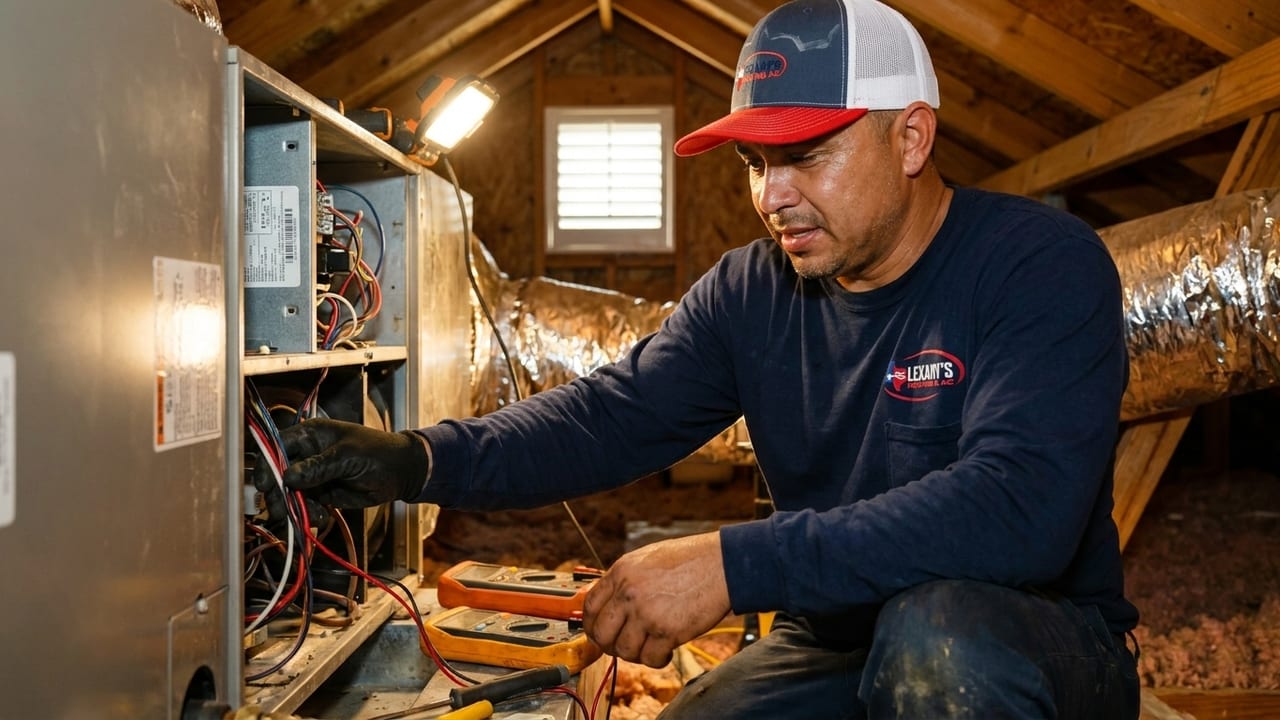
When a Forney homeowner asks us about a heat pump install, the first thing we tell them is this: the brand on the box matters less than picking the right size and the right staging for their actual home. Here’s exactly what we install, why we chose Goodman as our primary line, and how we match the system to the house — and to our North Texas climate.
Goodman: our primary heat pump line
Goodman is the heat pump brand we sell and install most, and the reason is straightforward: it’s dependable, well-priced equipment, and parts are easy to find right here in the DFW area. That second point matters more than most homeowners realize at the time of purchase. If a part fails two years from now, local availability means a same-week repair instead of waiting for something to ship. With some premium or imported brands, that wait can stretch into days — in a Texas summer or a hard-freeze week, that’s not a comfortable situation.
Goodman also carries solid manufacturer warranties on its equipment. We walk every homeowner through what’s covered and for how long before anything gets signed. No surprises after the install.
We also install and service the other major brands homeowners ask for — Lennox, Trane, Carrier, and the rest. If you have a strong preference or an existing system from a different manufacturer, we’ll work with it. But when we’re starting fresh and you don’t have a strong preference, Goodman is where we land for most Forney homes.
A brand with strong North Texas distribution means a faster, less expensive repair when something eventually needs attention. It’s an unglamorous point — but it adds up over the life of a system you’ll run year-round for heating and cooling.
Staging options we fit to homes
“Staging” refers to how a heat pump controls its output — whether it runs at one fixed speed, two levels, or smoothly across a full range. This single choice shapes everyday comfort more than most people expect, so we explain all three options before recommending one.
A variable-speed unit costs more upfront. Whether that gap is worth it depends on your floor plan, how sensitive your household is to humidity, and how long you plan to stay in the home. We’ll lay out the numbers honestly and let you decide — there’s no upsell pressure toward the higher unit.
How we size and match the system
This is the part that gets skipped when a homeowner gets a rushed quote: a heat pump has to be sized to the actual house, not to what was there before. An oversized unit short-cycles, leaves the air feeling humid, and wears out faster. An undersized one runs nonstop and still falls behind on the hottest or coldest days.
What a real load calculation covers
Before recommending a unit, we calculate the actual heat load of your home. That means accounting for square footage, ceiling height, insulation quality, window count and orientation, ductwork condition, and how the home faces the sun. Swapping in “the same tonnage as before” skips this entirely — and the old unit may have been the wrong size from the start.
Matching the indoor and outdoor units
A heat pump is a system — the outdoor unit and the indoor air handler or coil work together. Pairing a new outdoor unit with an old indoor coil can quietly throw away the efficiency you paid for, and it may void the manufacturer warranty. We’ll tell you straight whether a matched system or a single-component swap is the honest call for your situation.
Checking the ductwork
New equipment on leaky or undersized ducts doesn’t perform the way the spec sheet says it will. Sometimes the ductwork is the real problem — and fixing it is the better investment. We’ll tell you if that’s what we find.
Handling our occasional hard freeze
A heat pump works by pulling heat out of outdoor air — and there’s usable heat in cold air even when it doesn’t feel like it. A modern unit stays efficient well into the 30s. For Forney’s climate, where true hard freezes are brief and infrequent, this isn’t usually a concern through most of the heating season.
But we plan for the exceptions. Every heat pump install we do includes a clear plan for the rare hard freeze, before the install — not after:
- Electric backup heat strip: a small resistance-heat element that kicks in automatically when the outdoor temperature drops below the point where the heat pump alone can keep up. Most homeowners never notice it running.
- Dual-fuel setup: the heat pump handles most of the season efficiently, and a gas furnace takes over when temps drop hard. This option is worth considering if you already have a gas line and want maximum efficiency through both mild and cold weather.
Either way, the handoff is automatic — you set the thermostat and the system handles the rest. The key is configuring it correctly at install time so you’re not caught off guard in January.
A heat pump runs in both summer and winter — which means it logs more hours than a furnace that only works part of the year. A seasonal tune-up each spring or fall (cleaned coil, confirmed refrigerant charge, checked electrical connections) does more to protect performance and lifespan than on a system that only runs for a few months. No contract to sign — just a smart once-a-year visit.
What to expect from the install
Most of the time, the person who comes out is owner Gustavo — same-day, in most cases across Forney and the surrounding area. He’s been doing this since he learned the trade from his father, and he’s been based in Forney for eight years. When you call, you’re not getting a dispatcher sending an unknown crew. You’re usually getting the owner himself.
He’ll walk through the sizing, explain the staging options, and give you an upfront quote before any work starts. If your existing system just needs a repair instead of a replacement, he’ll tell you that too. The goal is to fit the right system to your home — not to sell the most expensive unit on the truck.
Lexany’s is NATE-certified, licensed in Texas (TX A/C #51447), and bilingual in English and Spanish. Same-day service across Forney, Mesquite, Terrell, Kaufman, Heartland, Rockwall, Heath, and surrounding North Texas communities. Financing available through Wells Fargo.
Heat Pump FAQs
Why do you default to Goodman heat pumps?
Goodman is our primary line because it’s dependable, honestly priced, and — importantly for a Forney homeowner — parts are widely available right here in the DFW area. If something needs attention two or three years from now, we’re not waiting days for a shipped part. That keeps future repair costs down and turnaround times short.
Can I get a variable-speed heat pump on a tighter budget?
Sometimes, yes. Variable-speed units do cost more upfront, but if humidity control and quiet operation matter a lot to you — especially through a muggy Texas summer — the comfort difference is real. We’ll show you the price gap and let you decide. There’s no one right answer.
What happens on a below-freezing night?
A properly set-up heat pump handles almost every Forney winter night on its own. For the rare hard freeze, we configure either an electric backup heat strip or a dual-fuel pairing with a gas furnace. Done right, you never notice the handoff — the system just keeps running.
Do I need to replace the indoor unit too?
Often, yes. Pairing a new outdoor unit with an old indoor coil can quietly throw away efficiency and may void the manufacturer warranty. We’ll tell you honestly whether a matched system or a single-component swap is the right call for your situation — and why.
How long will the heat pump last?
With seasonal tune-ups, most heat pumps in our climate run well for roughly 12-15 years. Because the system works year-round on both heating and cooling, keeping the coil clean and the refrigerant charge correct matters more than on a furnace that only runs part of the year.
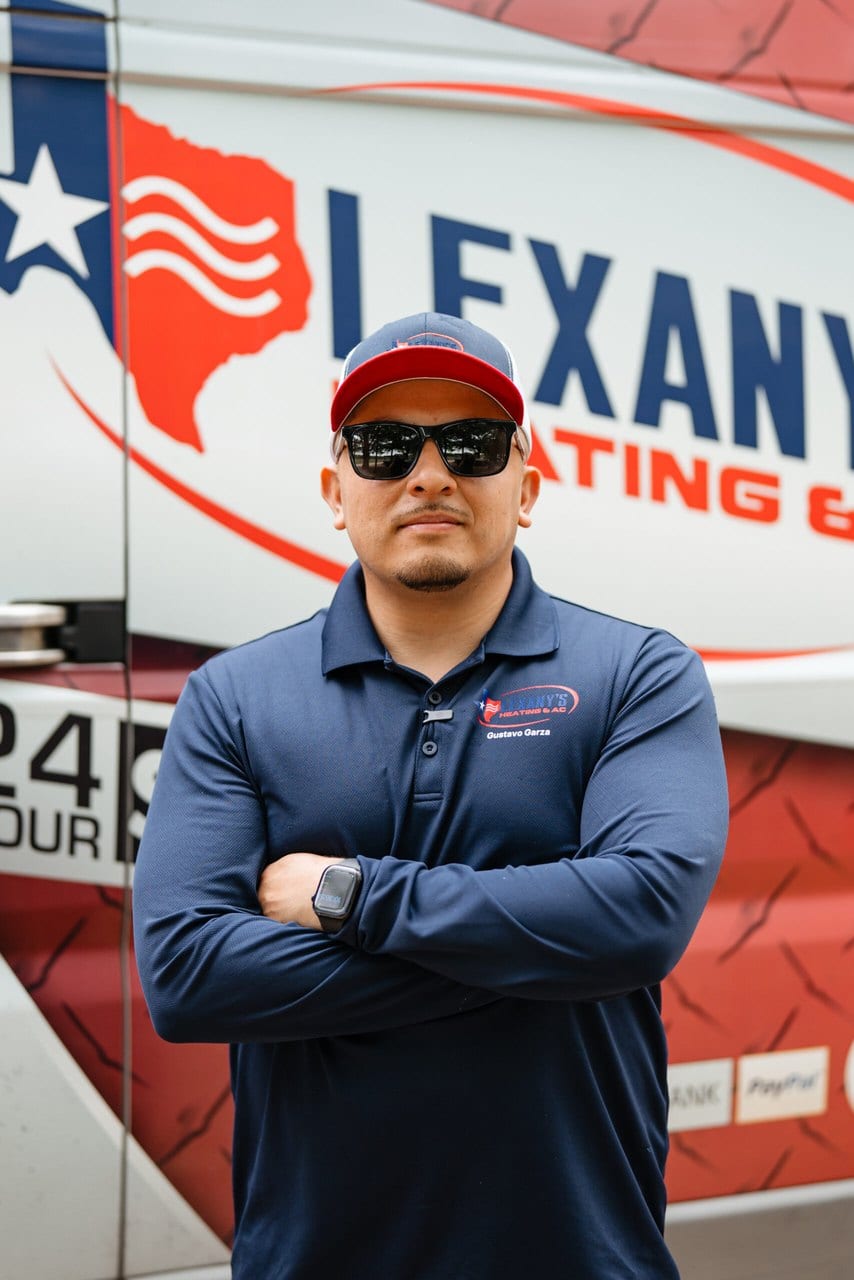
Owner of Lexany’s Heating & AC. Family-owned in Forney since 2011 — most days he’s the one on the truck doing the work himself. Bilingual (English/Spanish).