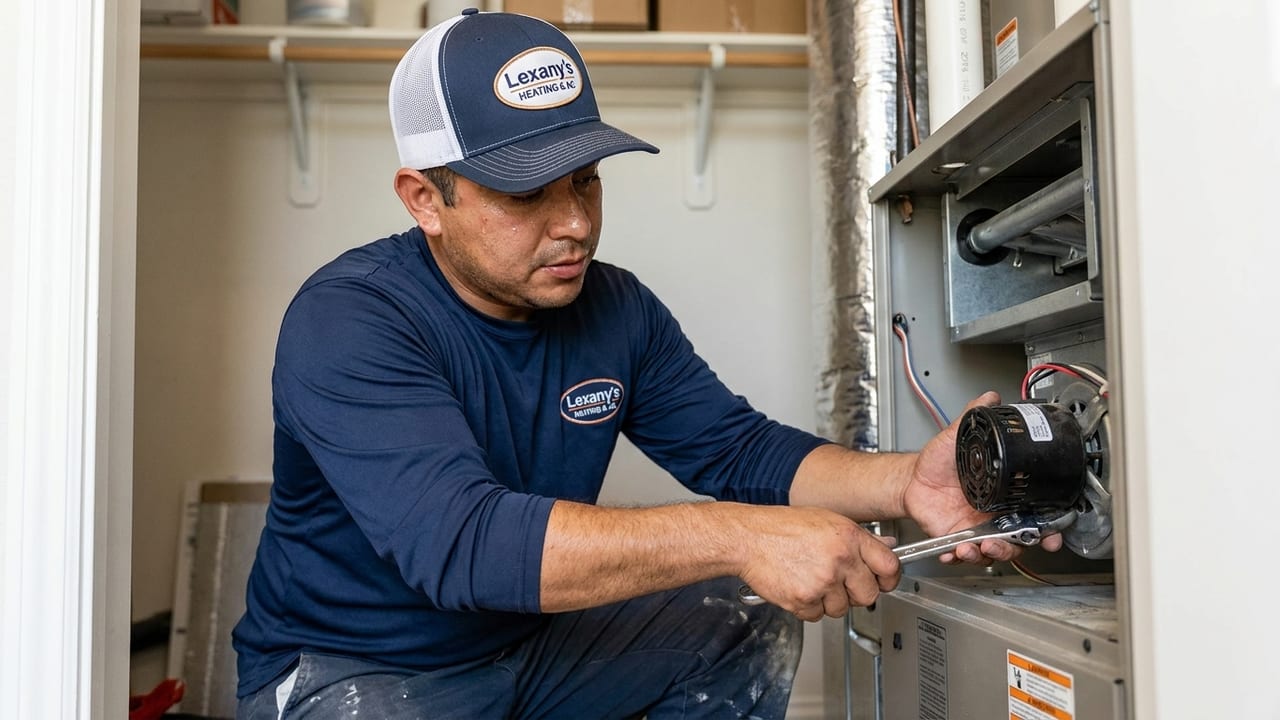
If you have a gas furnace and you’re wondering whether it makes sense to go electric — or if you’re moving into a home without a gas line at all — you’re asking a question that comes up more often in Forney than you might think. The short answer is: it depends on your home, and one option in particular fits our North Texas winters quite well. Here’s the honest breakdown.
Why homeowners consider going electric
There’s no single reason people make this switch. A few of the most common ones we hear:
- No gas line. Some homes in Forney and the surrounding area — especially in neighborhoods built in the last decade or two — were never connected to the gas grid. If there’s no line, electric heat isn’t a choice, it’s the only option.
- One system that heats and cools. A heat pump is an air conditioner that can run in reverse to heat your home. One outdoor unit, one thermostat, year-round comfort. Replacing both an aging furnace and an aging AC at the same time often makes more financial sense than replacing them separately on two different clocks.
- Long-term fuel costs. Natural-gas prices swing. Some homeowners want to lock in on electricity — especially if they’re adding solar or plan to — so that more of their home’s energy use is under one roof.
- Simplifying the home. Fewer appliances burning gas means fewer annual inspections and fewer points of failure. For some homeowners that peace of mind is worth something.
None of these reasons is a slam dunk on its own. Whether the switch makes sense for your home is a conversation, not a formula — but the first step is understanding what your options actually are.
Two paths: heat pump vs. electric furnace
When you hear “electric heating,” people usually mean one of two things, and they are very different pieces of equipment.
Option 1: A heat pump
A heat pump doesn’t generate heat by burning fuel or running electric coils. It moves heat — pulling warmth out of the outdoor air and carrying it inside (there’s usable heat in cold air even when it doesn’t feel like it). Because it’s moving heat rather than creating it, a heat pump can deliver significantly more warmth per unit of electricity than resistance heat. In cooling season it just runs in the other direction, pulling heat out of your house and dumping it outside — exactly like a regular air conditioner. One outdoor unit does both jobs.
Option 2: An electric furnace
An electric furnace heats air the same way a toaster does — electric coils get hot, air blows over them. It’s reliable and straightforward, and there’s no gas line required. The tradeoff is running cost: because it converts electricity directly into heat at a 1:1 ratio, it uses considerably more electricity than a heat pump doing the same job. In a climate like ours, that difference adds up quickly across a winter.
A heat pump moves heat; an electric furnace makes it. In North Texas — where winters are mostly mild — a heat pump is almost always the more efficient choice of the two.
Why our climate favors a heat pump
Heat pumps are most efficient when outdoor temperatures stay above the mid-30s — which describes the large majority of our heating season in Forney. We get maybe a handful of genuinely hard freezes each winter, and modern heat pumps are built to handle those with a backup heat strip (or paired with a gas furnace in what’s called a dual-fuel setup). The rest of the time, the heat pump is doing all the work at a fraction of what electric resistance heating would cost.
Our long cooling season also matters. Unlike a gas furnace — which sits idle from March through October — a heat pump earns its keep all summer doing the job your AC would do anyway. The math for total annual utility cost often looks very different from what people expect when they account for both seasons.
Heat pump vs. electric furnace: side by side
What a conversion actually involves
Swapping from a gas furnace to a heat pump is more than pulling out one box and dropping in another. Here’s what any honest contractor should be checking:
- Electrical capacity. A heat pump and backup heat strip draw considerably more current than a gas furnace, which only needs electricity for the blower and controls. The panel and the circuit to the air handler both need to handle the new load. Sometimes that means an upgrade; sometimes it doesn’t. We check before we quote.
- Sizing the new system. The gas furnace that was in your home may not have been the right size to begin with — especially in older homes. A proper heat pump install starts with a real load calculation for your square footage, insulation, windows, and how your home faces the sun, not with what was there before.
- Ductwork inspection. A heat pump moves a higher volume of air at a lower temperature than a gas furnace. Ducts that were undersized for a furnace can become a real problem with a heat pump. We look at the duct system before we finalize equipment selection.
- Backup heat for freezes. We plan for the two or three nights a year Forney actually gets into the low 20s. A properly sized backup heat strip, or a dual-fuel pairing with a small gas furnace, handles those nights while the heat pump runs everything else.
- Decommissioning the gas line. If you’re going fully electric and there’s no other gas appliance in the home (range, dryer, fireplace), the gas line to the furnace gets capped and the meter may be removed. That’s a call between you and Atmos Energy; we’ll walk you through how it works.
Heat pump efficiency ratings are tested on matched indoor and outdoor units. Swapping in a new outdoor unit against an older indoor coil quietly discards the efficiency you paid for — and may void the warranty. When we quote a conversion, we quote a matched system and explain why.
Things to weigh before you decide
We’re not going to tell every homeowner to rip out a working furnace. Here are the honest considerations that should drive the conversation:
How old is what you have?
If your gas furnace has a few good years left and your AC is relatively new, the timing for a full heat pump conversion may not be now. If both systems are aging — or if one of them just failed — replacing both at once with a heat pump often costs less overall than two separate replacements on two separate schedules.
What are your gas and electricity rates?
The running-cost comparison between a heat pump and a gas furnace depends on what you actually pay per therm and per kilowatt-hour in your area. Those rates are specific to your utility and your rate plan. We can run through the math with you; the numbers change, but the exercise is worth doing before you commit.
Rebates and incentives
There are federal and sometimes state or utility rebates available for qualifying heat pump installs. The amounts, eligibility rules, and paperwork requirements change frequently. We’ll tell you what we know at the time of your install and point you toward the right sources — but specific rebate amounts depend on what’s available at the time of your job — we’ll confirm what applies to your home then and point you to the official sources.
Your gas line situation
If you have a gas range, dryer, or fireplace you want to keep, the gas line stays. A heat pump conversion doesn’t force you off gas entirely — it just replaces the furnace. Some homeowners prefer the hybrid approach: a heat pump for all but the coldest nights, with the gas furnace retained strictly as backup (dual-fuel). It’s a real option and we’ll lay it out honestly.
For most Forney-area homes with an aging HVAC setup, a properly sized heat pump is worth a serious look. The best next step is a conversation — and if you call, you’ll most likely talk directly to Gustavo. Same-day availability, straight answers, no pressure. We’ve been doing this in Forney since 2011 and we’d rather lose a job by giving you the right advice than win one by telling you what you want to hear.
Gas-to-Electric FAQs
Can I switch from gas to electric heat without replacing my whole HVAC system?
Sometimes — if the outdoor unit or air handler is relatively new and compatible, a partial swap may be possible. More often, a proper conversion means a matched system: a new heat pump (outdoor unit + indoor air handler) that’s sized to your actual home. We’ll tell you honestly what makes sense before you spend a dollar.
Will a heat pump keep up on the coldest nights in Forney?
Most nights, yes. Modern heat pumps stay efficient well into the 30s. For the occasional hard freeze we get here — a few nights a year at most — the system is set up with a backup electric heat strip or configured as dual-fuel (the heat pump handles most nights; a gas furnace kicks in only when it’s genuinely frigid). Done right, you never notice the handoff.
Is electric heat more expensive to run than gas here?
It depends on your home, your electricity rate, and your gas rate — and those numbers shift over time. A heat pump is not electric resistance heat: it moves heat rather than creating it, so it can be very efficient in our mild winters. We’ll walk through the math for your specific situation before you commit to anything.
Do I need to upgrade my electrical panel for a heat pump?
Possibly. A heat pump and its backup heat strip draw more current than a gas furnace (which only needs electricity for the blower and controls). We check the panel capacity as part of every conversion consult and will tell you exactly what’s needed — no surprises after the job starts.

Owner of Lexany’s Heating & AC. Family-owned in Forney since 2011 — most days he’s the one on the truck doing the work himself. Bilingual (English/Spanish).