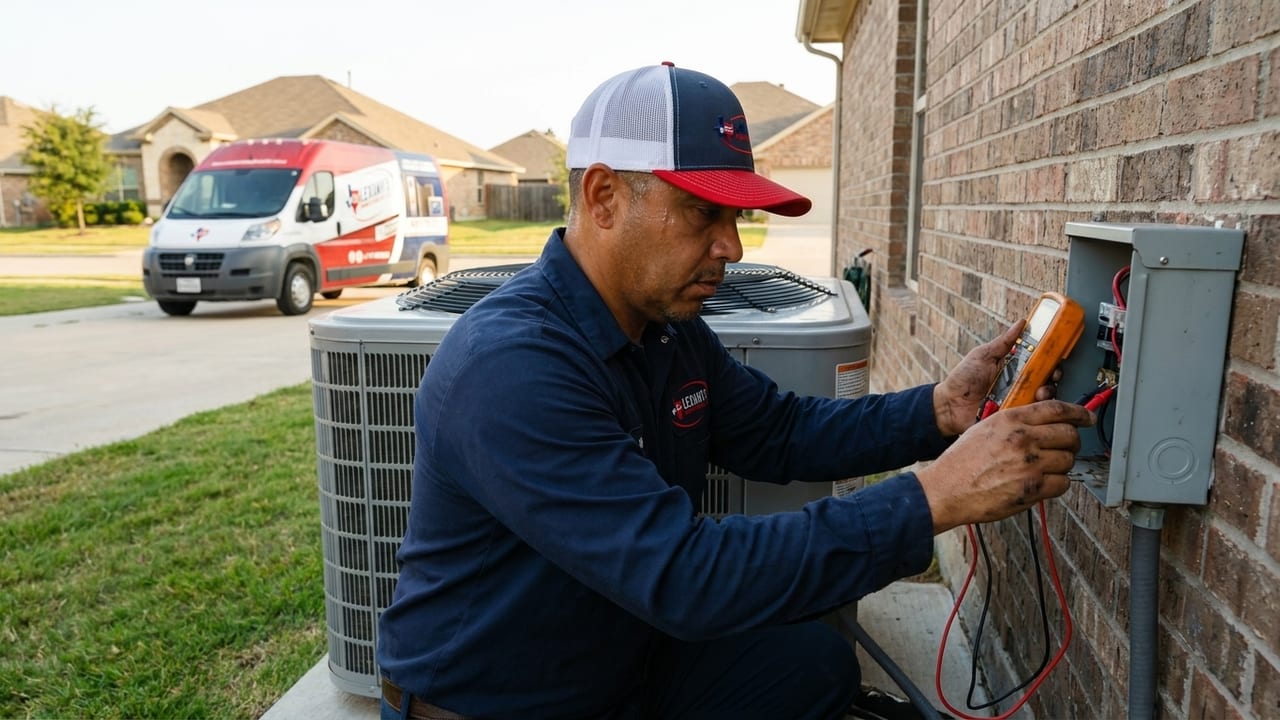
A ductless mini-split is built to last — but “built to last” assumes someone is looking after it. The difference between a system that runs reliably into its fifteenth year and one that needs a compressor replacement at year eight comes down almost entirely to whether the slow, invisible stresses were caught and corrected along the way. Here’s how that wear actually happens, and what a seasonal tune-up does to interrupt it.
How a mini-split wears out
Mini-splits don’t usually fail suddenly. They fail gradually — a slow refrigerant leak here, a coil that gets dirtier each season, an electrical connection that loosens a little more every time the unit cycles on and off in a Texas summer. None of these feel urgent on their own. That’s the problem.
The component that pays the price for all of it is the compressor. It’s the heart of the system and its most expensive part — on many units, a compressor replacement costs enough that a new system starts to make more sense. The compressor is also the component most sensitive to the conditions a tune-up corrects: refrigerant charge, coil cleanliness, and airflow. When those drift, the compressor compensates by running hotter and longer. Do that for enough summers and you’ve shortened its life in ways no repair call can reverse.
The four failure points upkeep prevents
These are the specific problems a seasonal tune-up catches before they do lasting damage.
1. A compressor strained by low refrigerant charge
Refrigerant doesn’t get “used up” — if the charge is low, there’s a leak. A system running with a slow leak doesn’t stop working immediately; it just makes the compressor work harder to move the same amount of heat. Over a full cooling season, that sustained extra effort translates directly into wear on internal compressor parts. The tune-up checks the charge, identifies the leak, and fixes it before the compressor accumulates that damage.
2. Coil efficiency loss — and the corrosion that follows
Both the indoor evaporator coil and the outdoor condenser coil lose efficiency as they accumulate a film of dust, cottonwood, and biological residue. A dirty indoor coil can’t absorb heat from the room efficiently; a dirty outdoor coil can’t shed heat to the air outside. The system compensates by running longer — which means more compressor hours, more electricity, and more wear per season.
In a coastal or high-humidity environment, there’s also a longer-term concern: coil fins can corrode when debris traps moisture against the aluminum. Forney isn’t coastal, but the humidity from a North Texas summer is real, and a coil that stays damp under a layer of organic debris is more vulnerable than a clean one. Rinsing the outdoor coil during a tune-up removes that accumulation before it has a season to work on the metal.
3. Electrical connections loosening over time
A mini-split cycles on and off dozens of times a day in a hot summer. Every start and stop puts a small thermal and mechanical stress on the electrical connections inside the unit — wire terminals expand slightly with current, then contract when the system shuts off. Over years, that cycling can loosen terminals and corrode contacts to the point where the resistance increases, generating heat. A loose connection running warm is both a fire risk and an efficiency drain. A tune-up includes inspecting and tightening these connections and checking components like the capacitor — which tends to degrade quietly before it fails outright.
4. A clogged condensate line causing water damage
The condensate drain line carries moisture from the indoor head to the outside. In a humid Texas summer, that line handles a lot of water — and algae and debris accumulate in it slowly, narrowing the opening over months. A partially clogged line doesn’t cause an immediate crisis; it just drains more slowly. A fully clogged line overflows into the drain pan, and then out of the pan onto your wall, ceiling, or floor. That’s a water-damage repair on top of an HVAC service call. Flushing the condensate line during a tune-up takes a few minutes and prevents that entirely.
Rinse the washable indoor filters every two to four weeks during a Forney summer. It takes five minutes and keeps airflow strong — restricted airflow is the fastest path to coil problems and compressor strain. The tune-up handles everything the filters can’t reach.
Year 8 vs year 15 — what the difference looks like
Gustavo and the team have been doing this in Forney since 2011, and they’ve seen both ends of this. A system that’s had consistent seasonal attention looks different from one that hasn’t — and the difference shows up well before the compressor fails.
By year 8, a neglected mini-split is often running noticeably less efficiently than it did when it was installed. The coils have built up several seasons’ worth of residue. If there’s been a slow refrigerant leak that was never caught, the charge is low enough that the system struggles on the hottest days. The condensate line may have overflowed at least once. The electrical connections have never been inspected. The owner is thinking about whether it’s worth repairing the next thing that breaks — or just replacing it.
A maintained system at year 8 is a different story. The coils are clean. The refrigerant charge has been verified each year and any small leak caught before it compounded. The electrical connections have been checked. The condensate line has never clogged because it was flushed every season. The compressor has been running in the conditions it was designed for. At year 15, a system like that is still running reliably — not because it’s exceptional hardware, but because the conditions that cause early failure were consistently removed.
The simple math of a tune-up vs early replacement
A ductless mini-split installation in the Forney area involves the equipment, the labor, the line set, and the electrical work. It’s a real cost — one that arrives much sooner on a neglected system than on a maintained one. A seasonal tune-up is a fraction of that cost, paid once a year (or twice, if you do spring and fall).
The math isn’t complicated. If a tune-up adds even a few years to the system’s useful life, the cost of the visits over that period is far less than what you’d pay for early replacement. And that’s before accounting for the repairs a tune-up prevents — a compressor replacement, a water-damage call from a clogged condensate line, or an electrical fault found after a breakdown rather than during a scheduled inspection.
We’ve kept the comparison general because HVAC costs vary by system size, age, and what’s found on the visit. If you want to know what a tune-up would find on your specific unit — and what it would actually cost — the honest answer is a call and a same-day look. Gustavo will give you a straight answer. TX A/C License #51447 · NATE Certified · bilingual EN/ES. Reach us at 469-728-7113.
What to do this season
Spring — before Forney’s cooling season gets serious — is the most useful timing. The system starts the summer with a clean coil, a verified refrigerant charge, a clear condensate line, and tight electrical connections. If you also run the system in heating mode through winter, a fall visit before the heating season is worth the same logic in reverse.
Maintained vs neglected — how the years stack up
There’s no contract involved in scheduling a visit. These are honest seasonal calls — you reach out when you want one, Gustavo or a tech comes out, and that’s it. Most calls around Forney are handled the same day. If you want to know what condition your system is actually in before the summer heat arrives, that’s the straightforward way to find out.
Mini-Split Tune-Up FAQs
How long should a ductless mini-split last?
A properly maintained ductless system can deliver reliable service well into its second decade. A neglected one — run through several hot Texas summers with a slow refrigerant leak or a persistently dirty coil — tends to fail much sooner, usually at the compressor. There’s no single number that’s universal, but the gap between a maintained unit and a neglected one is real and measurable in years, not months.
Does a seasonal tune-up actually extend the life of the system, or is that just marketing?
The mechanism is real. The compressor wears fastest when it runs under strain — low refrigerant charge, restricted airflow from a dirty coil, or a condenser coil that can’t shed heat efficiently all make the compressor work harder than it was designed to. A tune-up corrects those conditions before they accumulate wear. It’s the same reason oil changes extend an engine’s life: it’s not one visit that makes the difference, it’s the consistent removal of the conditions that cause early failure.
Can I skip a year if the system seems to be running fine?
That’s exactly when the slow problems are building. A refrigerant leak doesn’t announce itself — the system cools a little less efficiently, the compressor runs a little longer, and over a season or two that compressor is accumulating heat stress it wasn’t designed for. By the time you notice the airflow is weaker, the damage is already done. Catching it a year earlier almost always saves money.
Is there a contract involved in scheduling seasonal visits?
No. These are honest seasonal visits — you call when you want one, we come out. No contract, no recurring charge you didn’t ask for. If you want a reminder for spring and fall, set one yourself. Most of the time you’ll talk directly to Gustavo.

Owner of Lexany’s Heating & AC. Family-owned in Forney since 2011 — most days he’s the one on the truck doing the work himself. Bilingual (English/Spanish).