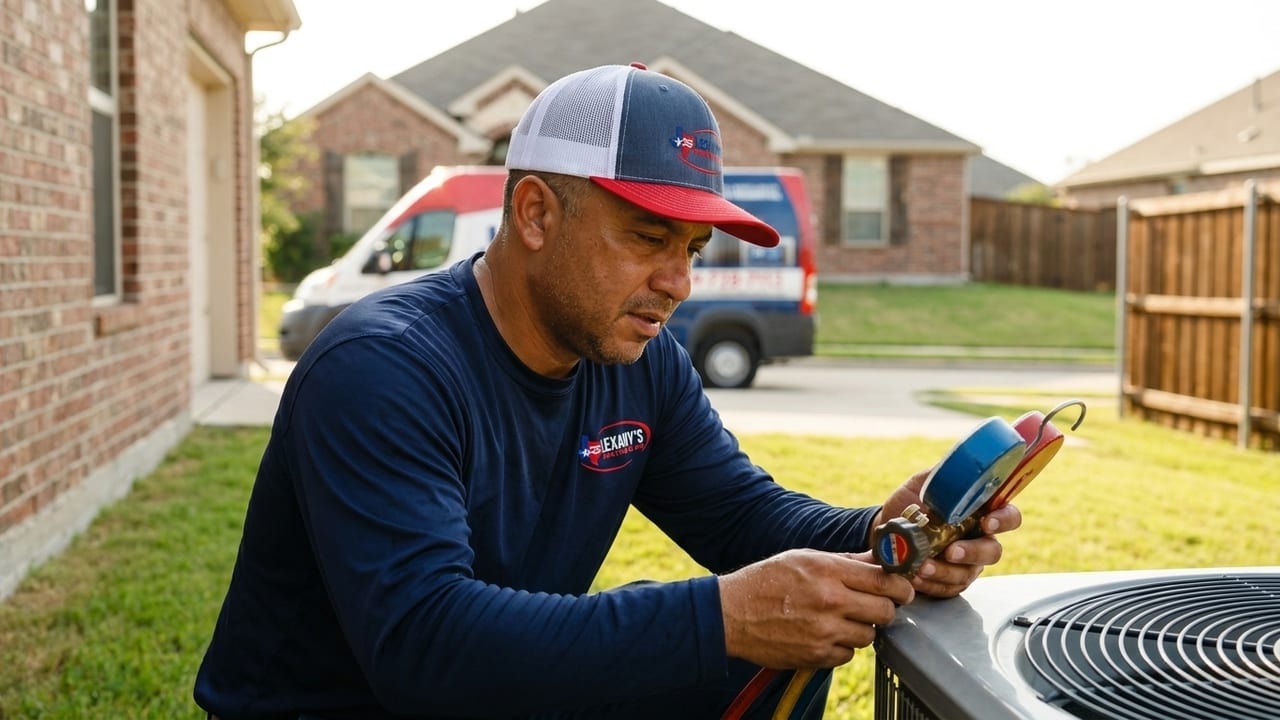
A ductless mini-split is one of the more forgiving systems in a Forney home — quiet, efficient, and easy to ignore when it’s working well. That’s exactly when a seasonal tune-up earns its keep. A tech visit before the big cooling push does things no amount of filter-rinsing can replicate: a checked refrigerant charge, a cleared condensate line, a clean outdoor coil. Here’s what a tune-up covers and why it pays off.
What a tune-up actually covers
A thorough seasonal visit on a ductless mini-split is more than a cleaning — it’s a systems check. Here’s what a tech works through:
- Wash the indoor filters. The mesh filters in the indoor head catch dust, pet dander, and pollen. They rinse clean, but a tech can inspect them for tears or mold and confirm the filter seats are sealing properly — not just that the filters exist.
- Clean the indoor evaporator coil. The coil behind the filters builds up a fine film of dust and biological residue over time. A dirty coil can’t transfer heat efficiently and creates the damp surface where mold grows. The tech cleans it with a no-rinse coil cleaner safe for the unit.
- Clear and flush the condensate drain line. The drain line carries moisture from the indoor head to the outside. Algae and debris clog it slowly — until it overflows onto your wall. Flushing it during a tune-up takes a few minutes; waiting costs drywall repairs.
- Rinse the outdoor condenser unit. The outdoor coil sheds heat; when it’s packed with cottonwood, grass clippings, or dirt from a Texas summer, it has to work harder to do the same job. A careful rinse restores airflow and efficiency.
- Check the refrigerant charge. Low refrigerant means there’s a leak — and a system running with low charge is straining the compressor. The tech checks the charge and, if it’s off, finds the source before topping it up.
- Inspect electrical connections and components. Loose terminals, corroded contacts, and a capacitor starting to fail are all easier to catch during an inspection than during a breakdown on a 100-degree afternoon.
- Test the system through its full operating range. Heating and cooling modes, fan speeds, the remote signal — everything gets cycled to confirm it’s responding correctly before the tech leaves.
Between tech visits, rinsing the indoor filters every two to four weeks during a Forney summer is the single most effective thing you can do. It takes five minutes and keeps airflow strong. The tune-up handles everything the filters can’t.
Steadier efficiency and lower bills
A mini-split’s efficiency rating — its SEER2 number — is the best-case figure from a factory test on a clean, properly charged unit. In real use, that number drifts. Dust on the coil acts as insulation. Low refrigerant makes the compressor run longer. A clogged drain forces the unit into a protection lockout. Each small issue takes a little more electricity to deliver the same comfort.
A tune-up resets the system close to its rated efficiency. You probably won’t see a dramatic overnight change on your bill — but over a full cooling season, a system running at its best consistently uses less electricity than one running at 80% of its potential every single day. In a North Texas summer that runs from May well into September, those daily inefficiencies add up.
With a tune-up vs. skipping it — a quick comparison
Longer equipment life
The compressor is the most expensive component in a ductless system, and it’s also the one most damaged by deferred maintenance. Running a compressor with a low refrigerant charge, poor airflow, or a dirty condenser coil shortens its life — the compressor runs hotter, works harder, and accumulates wear much faster than a unit that’s regularly serviced.
A well-maintained mini-split can run reliably for many years. One that’s been allowed to run dirty and undercharged through a series of hot Texas summers will wear out sooner — and compressor replacements are expensive enough that a new system often makes more sense. A seasonal tune-up is a small investment that extends the window before that decision arrives.
Cleaner air in your home
The indoor head of a mini-split is constantly cycling air through the room. When the evaporator coil stays damp — which it does naturally, since dehumidification is part of what it does — and the airflow through it slows down because of a dusty filter or a dirty coil surface, you create the right conditions for mold and bacteria to colonize the coil fins and drain pan.
That’s not theoretical. A mini-split that hasn’t been cleaned in a while will often produce a musty smell when it first kicks on — a sign the coil is growing something. Cleaning the coil and drain pan during a tune-up removes that growth and stops the system from circulating it through the room. For households with allergies, that’s not a minor benefit.
Fewer surprise breakdowns
Most mini-split failures during a Texas summer don’t come out of nowhere. They’ve usually been telegraphed — a slow refrigerant leak, a capacitor weakening, a condensate line that’s been partially clogged for months. A tune-up finds those things while they’re still small fixes, not after they’ve turned into a no-cool call in August.
Gustavo and the team have been doing this since 2011 — most of what breaks in a hot summer has a recognizable precursor. A seasonal inspection is a chance to find and fix the small things before the system decides to take a day off at the worst possible time.
Most tune-up calls around Forney and Kaufman County are handled the same day — you get Gustavo himself or one of the team. TX A/C License #51447 · NATE Certified · bilingual EN/ES. Reach us at 469-728-7113.
Protecting your manufacturer warranty
Many ductless manufacturers require annual professional service as a condition of the warranty. The fine print varies by brand, but the common thread is this: if a component fails and there’s no record of annual service, the claim can be denied. A tune-up visit creates exactly that record — date, tech, work performed.
Goodman, which is our primary line, makes parts and service widely available across North Texas — which keeps any future repair costs down regardless of warranty status. But keeping the warranty intact on a newer system is worth a one-time call to preserve.
When to schedule
Spring — before Forney’s cooling season kicks in — is the most practical timing. The system gets a clean slate before it starts working hard, and you avoid the late-May rush when everyone’s AC suddenly becomes urgent. Fall is the second good window, especially if the system runs in heating mode through winter.
There’s no contract involved. These are honest seasonal visits — you call when you want one, and we come out. If you want a reminder for spring and fall, set one. If you want a one-time visit before summer, that works too. Most of the time you’ll talk directly to Gustavo — same day, straight answer, no pressure.
Mini-Split Tune-Up FAQs
How often should a mini-split get a tune-up?
Once a year is the baseline — spring before the cooling season is the most popular timing around Forney. If the system heats and cools year-round, a second fall visit before the heating season is worthwhile. That said, cleaning the washable filters yourself every two to four weeks during peak summer is something you can and should do between tech visits.
Can I just clean the filters myself and skip the tune-up?
Filter cleaning is genuinely useful and something every homeowner can do — it takes five minutes and keeps airflow strong. But a tune-up goes much further: the tech checks the refrigerant charge, inspects electrical connections, clears the condensate line, and rinses the outdoor coil. None of those are safely DIY. Filters keep the system breathing; the tune-up keeps everything else running right.
Will a tune-up void my warranty?
No — the opposite. Most ductless manufacturers require documented annual service to keep the warranty valid. Skipping it is what can void coverage. We’re NATE certified and hold TX A/C License #51447, so the service is performed to a recognized standard.
Is there a contract involved?
No. These are honest seasonal visits — you call when you want one, we come out, and there’s no ongoing contract. If you want to set a reminder for spring and fall, great. If you just want a one-time visit before summer, that works too.

Owner of Lexany’s Heating & AC. Family-owned in Forney since 2011 — most days he’s the one on the truck doing the work himself. Bilingual (English/Spanish).