If your air conditioner runs all afternoon and the house still won’t get comfortable, you’re not imagining it — and your system probably isn’t broken. A Forney July simply asks more of an AC than any other month. Here’s what’s going on, and the handful of things that genuinely make a difference.
What “heat load” really means
Your AC doesn’t cool the air so much as it removes heat from your home and dumps it outside. On a 100°+ afternoon, heat pours in through the roof, walls, windows, and every time a door opens — so the system has to work longer just to keep up. That’s “heat load,” and in July it’s at its highest.
The important takeaway: a unit that cools your home easily in May can run nearly nonstop in July and still only hold a few degrees below the outdoor temperature. That doesn’t automatically mean something’s wrong.
Most home systems are designed to hold roughly 18–20° below the outdoor temperature. When it’s 100° out, 78–80° indoors is the system doing its job — not failing.
Why airflow is the quiet culprit
When a home won’t cool in peak heat, the cause is often airflow — not the AC unit itself. A clogged filter, closed-off returns, or dirty coils all choke the system and leave it gasping exactly when it’s working hardest.
The usual airflow offenders
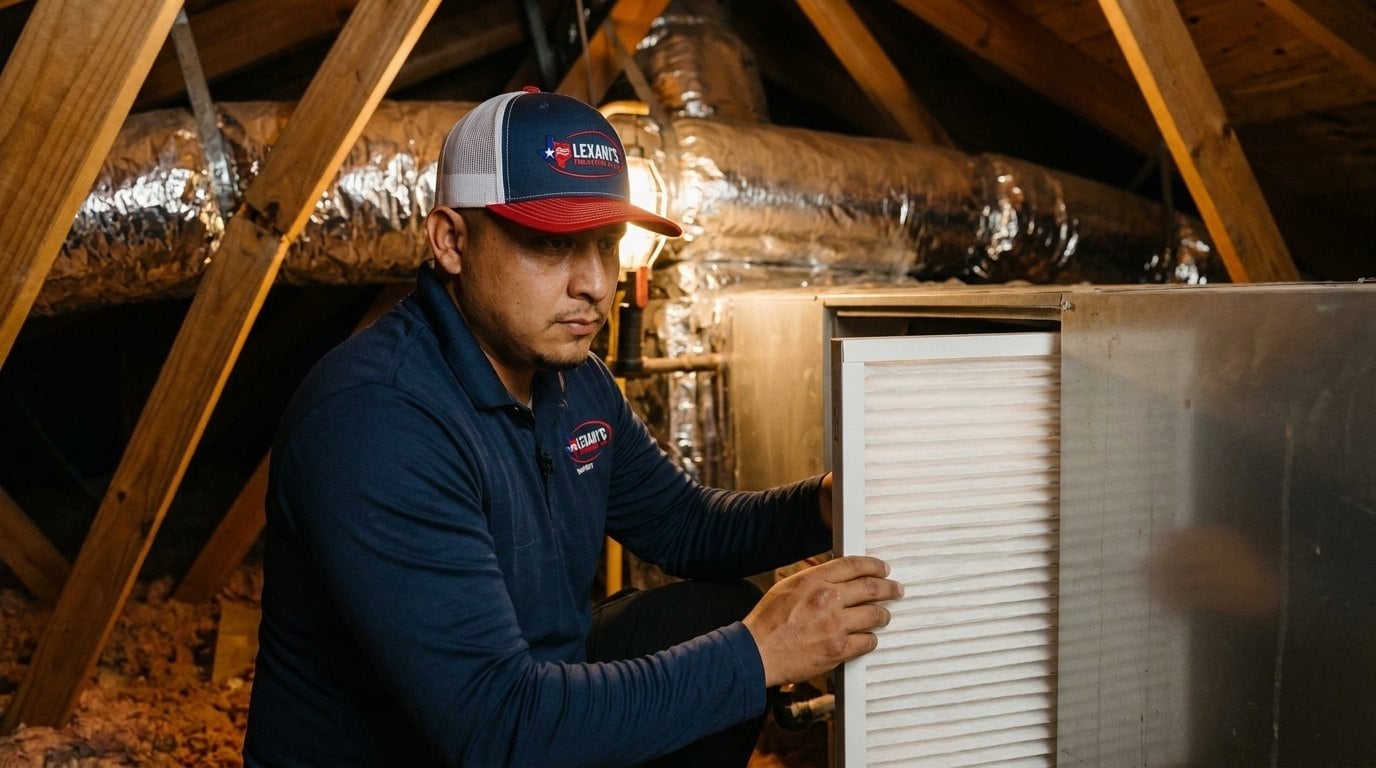
- A dirty air filter. The single most common one — and the easiest to fix yourself.
- Blocked or closed vents. Furniture over a return or too many closed registers starves the system.
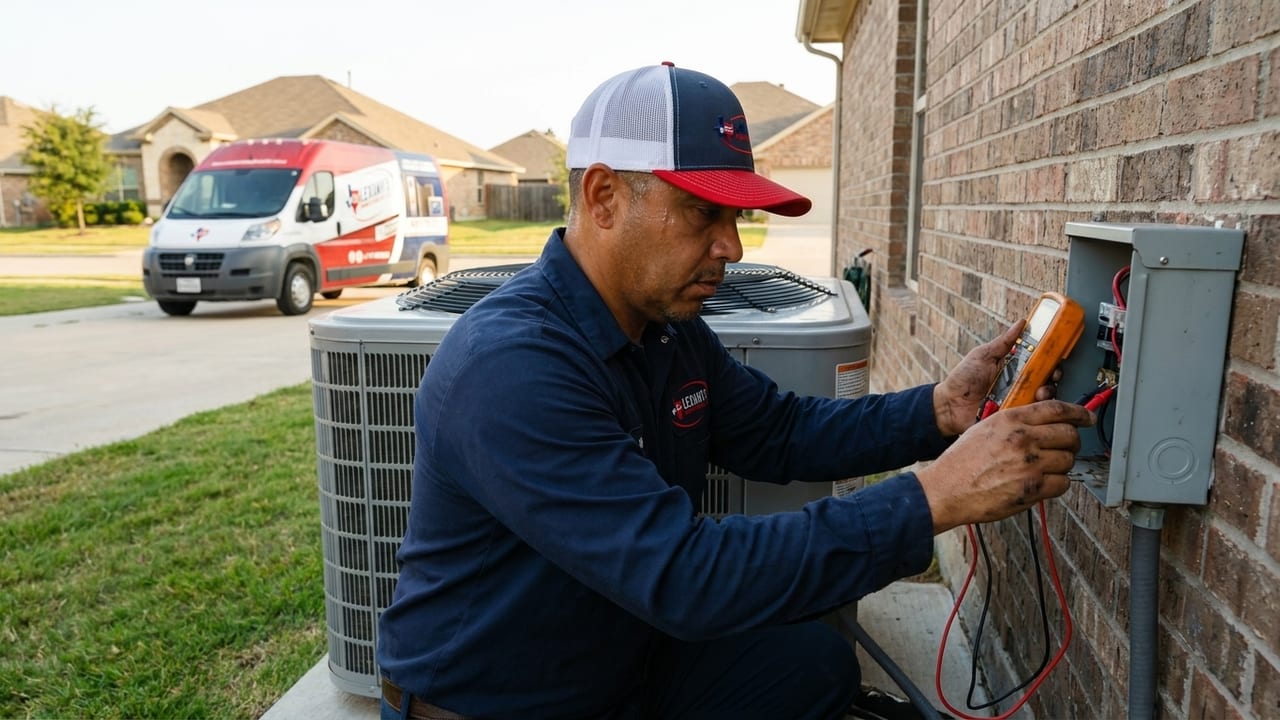
- A dirty outdoor coil. Grass clippings and dust on the condenser keep it from shedding heat.
Why July humidity makes it feel worse
Temperature is only half of what you feel. Your AC also pulls moisture out of the air as it passes over the cold indoor coil, and on a sticky July day there is a lot of moisture to pull. When the humidity inside stays high, a room at 76° can feel several degrees warmer, and most people react by turning the thermostat down. That makes the system run even longer without fixing the real problem.
A few things help. Set the thermostat fan to AUTO instead of ON, so the water that condenses on the coil can drain away between cycles. Run the kitchen and bathroom exhaust fans while you cook and shower. If the house still feels clammy with the AC running, a whole-home dehumidifier can take over the moisture work. Our guide to controlling indoor humidity goes into more detail.
The signs your AC is falling behind
Some struggling is normal in July; some isn’t. Here’s a quick way to tell what you can shrug off versus what’s worth a closer look.
5 things that actually help your AC
- Change the filter. In peak summer, check it monthly. A clean filter restores airflow instantly.
- Give the outdoor unit room to breathe. Clear leaves and clippings, and keep about two feet of space around it.
- Pick one setpoint and leave it. Cranking it down to 68° won’t cool faster — it just runs longer.
- Close the heat out. Blinds on the sunny side and a ceiling fan let you stay comfortable a couple degrees warmer.
- Get a seasonal tune-up before the worst of it. A cleaned coil and a checked charge mean the system isn’t fighting itself in August.
We do honest, seasonal tune-ups — not a service contract you’re locked into. A spring visit is the surest way to keep July from becoming an emergency.
When the system itself is the problem
Sometimes a July struggle has nothing to do with the filter or the weather. Two equipment causes come up again and again: sizing and age.
Sizing. An AC that is too small for the house will run all day in July and still fall behind. One that is too big cools the air fast, shuts off before it removes much moisture, and leaves the house cool but damp. Either way, the fix starts with a proper load calculation for your home, which is how we size every AC replacement.
Age and wear. An older system slowly loses capacity as coils get dirty, parts wear and small refrigerant leaks go unnoticed. A unit that kept up fine ten summers ago may not keep up now. Low refrigerant always means a leak somewhere, and topping it off without finding the leak only buys a few weeks. If your system is getting up in years and every July is harder than the last, a tech can tell you whether a repair will get you through or whether it’s time to compare options.
Getting ahead of next July
The best time to deal with a July problem is in March or April. A spring seasonal tune-up cleans the coils, checks the refrigerant charge and clears the drain line while the weather is mild and the schedule is open. Small issues found in spring are usually quick fixes. The same issues found on a 104° afternoon tend to show up as a system that won’t cool at all.
It also helps to know where your system stands. Pay attention to how cool the house stays during the first really hot week of the year. If it holds steady and the air from the vents feels cold, you’re in good shape. If it starts slipping earlier each summer, mention it at your next visit. Our list of warning signs your AC can’t keep up is a good checklist to run through.
When it’s worth a call
If your vents are blowing warm air, the system is freezing up, or it simply can’t get within range of the thermostat after you’ve changed the filter, that’s the point to bring in a tech for AC repair. In and around Forney we handle most calls the same day — and you’ll talk to a real local person, often owner Gustavo himself, not a call center.
Texas-Summer AC FAQs
Why does my AC run almost constantly in July?
On a 100°+ Forney afternoon your system has to remove far more heat than usual, so longer run times are normal. As long as it’s holding roughly 18–20° below the outdoor temperature and the air is cold, it’s keeping up — not failing.
Does leaving the air conditioner at one temperature save money?
Generally yes. Setting it very low doesn’t cool the house any faster; it just makes the system run longer. Pick a comfortable setpoint and let it hold steady, and use fans and blinds to feel comfortable a couple degrees warmer.
When should I stop waiting and call?
Call if the vents blow warm air, you see ice on the lines or water around the unit, the breaker keeps tripping, or the house can’t get near the thermostat setting after a fresh filter. Most calls around Forney are handled the same day — 469-728-7113.

Owner of Lexany’s Heating & AC. Family-owned in Forney since 2011 — most days he’s the one on the truck doing the work himself. Bilingual (English/Spanish).