In a Forney summer, cooling is usually the biggest line on the power bill — so it’s no surprise homeowners ask which HVAC upgrade will bring it down. The honest answer is that a few changes move the needle, a couple are oversold, and the best-value win is one nobody tries to sell you. Here’s how to spend smart.
Where your HVAC energy actually goes
Before chasing equipment, it helps to know where the energy goes. Most of a Forney home’s HVAC cost comes from the system running longer than it should — and it runs longer for predictable reasons: it’s the wrong size, the ducts leak conditioned air into the attic, the coil and filter are dirty, or the house is letting heat pour in faster than the system can remove it. Fix the reasons it overworks, and the bill follows.
Signs your system is costing you more than it should
You don’t need special equipment to spot an HVAC system that’s wasting money. A few signs show up long before the bill does:
- The bill climbs while your habits stay the same. Compare this July to last July. A steady rise with the same thermostat settings usually means the system is running longer to do the same work.
- Some rooms never catch up. A bedroom that stays warm while the rest of the house is fine often points to leaky or undersized ducts, and the system keeps running to try to cool it.
- The system turns on and off every few minutes. Short cycling wastes energy on every start. It usually means the unit is oversized or something is off with airflow or the refrigerant charge.
- The house feels damp even when it’s cool. High indoor humidity makes people turn the thermostat down, which adds run time.
- Dust comes back fast after cleaning. Leaky return ducts can pull dusty attic air into the system, and the same gaps let cooled air escape.
If two or more of these sound familiar, start with the ducts and the system’s sizing before you shop for new equipment. Our post on what’s wrong with your HVAC system walks through the common causes.
HVAC upgrades that move the needle
Right-sizing and sealed ductwork
This is the foundation, and it’s where the biggest, most reliable savings live. A system sized to your actual home — paired with ducts that are sealed and properly sized — delivers the cool air you paid for instead of losing a chunk of it through gaps in the attic. We often find this matters more than the equipment itself.
A high-efficiency or inverter-driven AC or heat pump
If your system is aging, a modern high-efficiency unit — especially a variable-speed (inverter) model that runs at a low, steady output instead of slamming on and off — cools more evenly, pulls humidity out better, and uses less electricity doing it. A heat pump adds efficient heating to the same equipment, which is a strong combination in our mild winters.
A smart thermostat and zoning
A smart thermostat trims waste by not cooling an empty house and holding a steady setpoint. Zoning — sending conditioned air where people actually are — helps in larger or two-story homes where one part bakes while another sits empty. Both are real, sensible savings; just keep their size in perspective.
A right-sized system with tight ducts will out-save a top-of-the-line unit installed over leaky ductwork — every time. Get the basics right, then add efficiency on top.
Realistic payoff, at a glance
HVAC upgrades that are oversold
A few things get pitched harder than they deserve. Swapping a working system for the absolute highest-rated model on the market rarely pays back before the savings would have come anyway. Add-on gadgets that promise to slash your bill on their own almost never do. And replacing a unit that’s only a few years old purely to “save energy” usually costs more than it returns. None of that means efficiency is a myth — it means the order you do things in matters.
A sensible order to upgrade
- Seal and check the ducts, and make sure the system is the right size for the home.
- Keep up with seasonal tune-ups and filter changes so whatever you have runs at its rated efficiency.
- When the system is genuinely aging, replace it with a right-sized, high-efficiency unit — a heat pump if it fits your home.
- Add a smart thermostat, and zoning if your layout calls for it.
- Tighten the house itself — shade, weatherstripping, and keeping heat out — so the system has less to fight.
We’d rather tell you to seal your ducts and book a seasonal tune-up than sell you a system you don’t need yet. Honest advice is the whole business.
Replace now or wait?
An older system that still runs well doesn’t have to come out just to save energy. The math changes when it needs a repair every season, when it still runs on R-22 refrigerant (no longer made in the U.S., so every recharge gets more expensive), or when it’s 12 to 15 years old and the bill keeps rising anyway. At that point a right-sized, high-efficiency replacement tends to pay back faster, and financing can spread the cost so it doesn’t land all at once.
If you’re not sure which side of that line your system is on, ask for an honest look before anything breaks. A system that fails in August leaves you choosing in a hurry, and that rarely ends with the best choice.
The most affordable “upgrade” of all
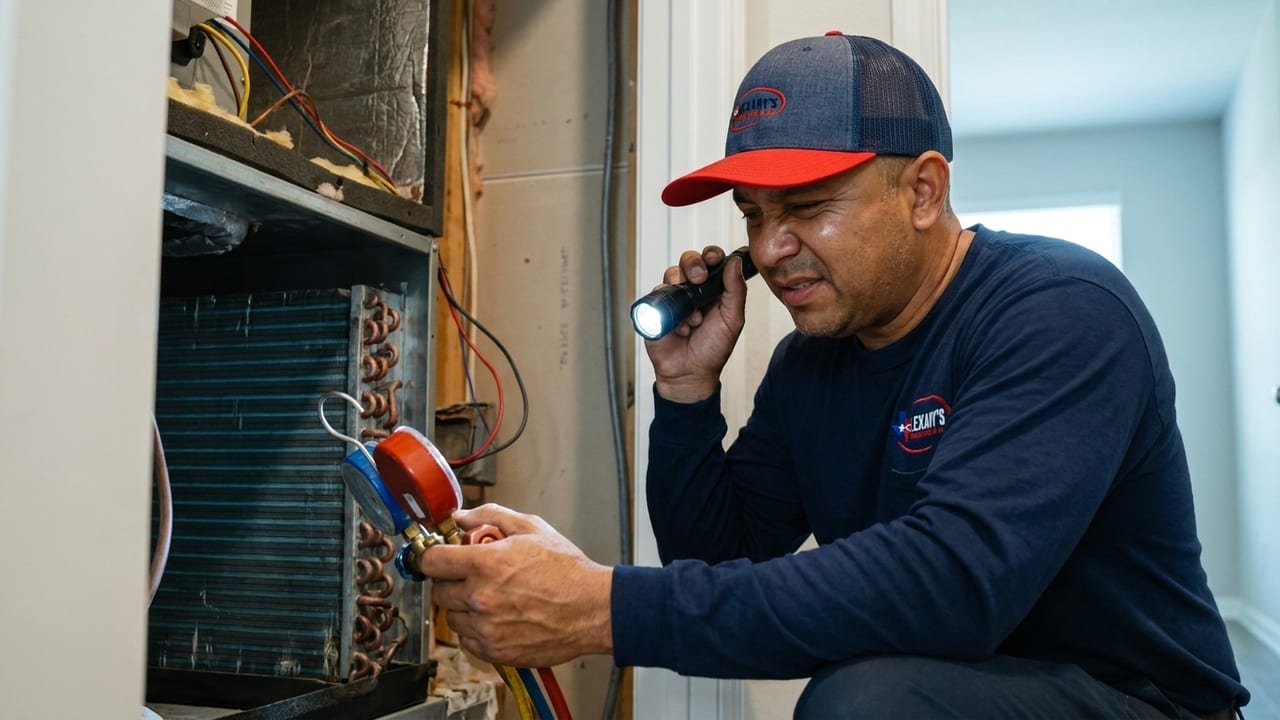
Maintenance. A clean coil, a correct refrigerant charge, and a fresh filter let your current system reach the efficiency it was built for — no purchase required. It’s not glamorous, but a seasonal tune-up is consistently the best money a Forney homeowner can spend on their power bill. When you’re ready to talk about a bigger upgrade, we’ll give you the honest math first — usually the same day, often from owner Gustavo himself.
Lower-Bill FAQs
What’s the single biggest thing that lowers an HVAC bill?
Right-sizing and sealed ductwork. A correctly sized system with tight ducts wastes far less energy than an oversized unit pushing air through leaky ducts. Sealing those ducts is often a smaller job than people expect. The fanciest high-efficiency system can’t make up for leaks in the attic.
Is a high-SEER2 air conditioner worth the extra money?
Up to a point. Moving from an old, low-efficiency unit to a solid mid- or high-efficiency one can noticeably cut summer bills. Chasing the very highest rating on the market usually has a long payback, so we help you find the level that actually pays for itself in our climate.
Will a smart thermostat really save me money?
It can — mostly by not cooling an empty house and by holding a steadier setpoint. The savings are real but modest compared with right-sizing and sealing ducts, so treat it as a helpful add-on, not the main fix.
Does a tune-up actually lower my bill?
Yes, in a quiet way. A dirty coil, a low charge, or a clogged filter all force the system to run longer for the same comfort. A seasonal tune-up keeps it running near its rated efficiency for a fraction of what new equipment costs.

Owner of Lexany’s Heating & AC. Family-owned in Forney since 2011 — most days he’s the one on the truck doing the work himself. Bilingual (English/Spanish).