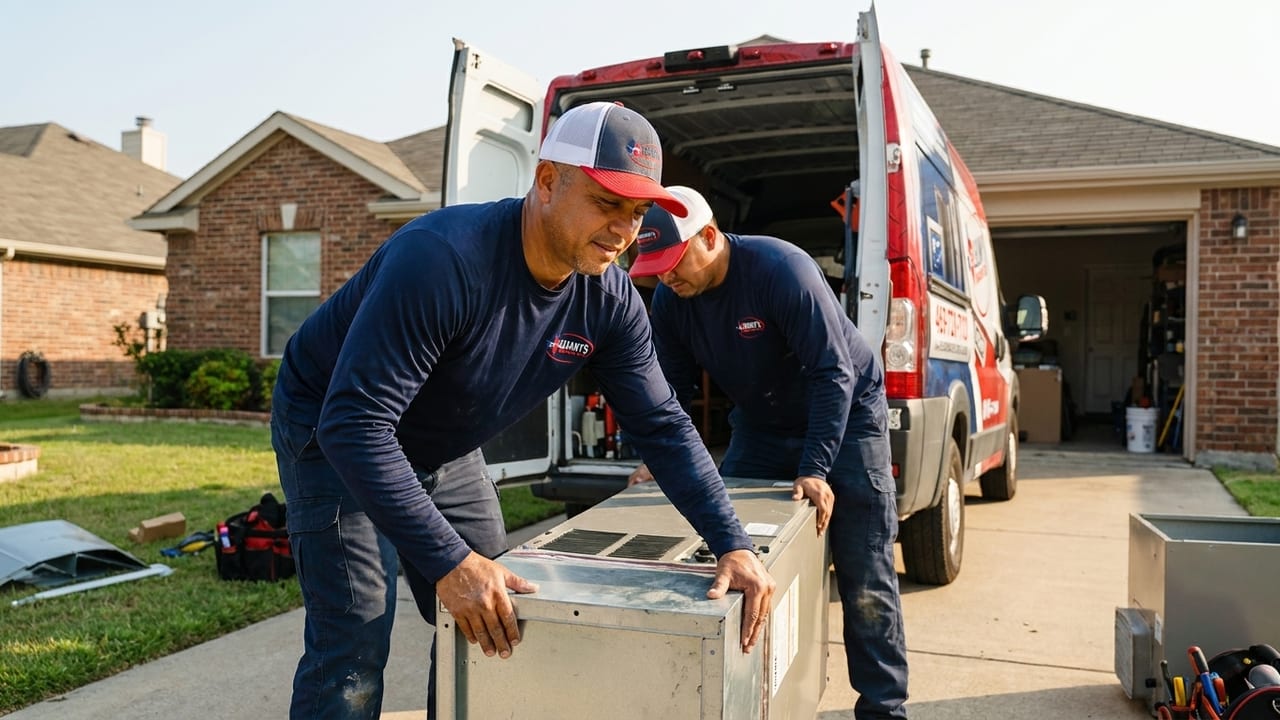
One of the most common questions we hear before an install is: “Which brand should I get?” It’s a fair question. The honest answer is that the brand matters less than most people expect — and what matters a lot more is that the system is sized correctly for your home and installed cleanly. Here’s how we actually approach it.
Goodman: our primary line
Goodman is the brand we sell and install most. We chose it as our primary line because it checks the boxes that matter for a Forney-area homeowner: it’s built to handle North Texas summers, it’s priced fairly, and — critically — parts are widely available right here in the DFW area. That last point is easy to overlook when you’re buying. If a part fails three years from now, local availability means a faster repair at a lower cost. With some premium or imported brands, you can wait days for a part to ship.
Goodman also carries solid manufacturer warranties on its equipment. We’ll walk you through the coverage before you sign anything so there are no surprises.
If a component fails on your system two or three years from now, a brand with strong North Texas distribution means same-week repair instead of a multi-day wait for a shipped part. It’s a practical, unglamorous advantage — and it adds up.
Other brands we install and service
Goodman is what we default to on new installs, but we install and service all the major brands homeowners already know and ask for. If you have a strong preference — or you already have a system from a different manufacturer that just needs work — we’ve got you covered.
Brands we install and service
- Lennox — high-efficiency options; widely known in the DFW market
- Trane — durable reputation; common in North Texas homes
- Carrier — broad product range from entry-level to variable-speed
- Bryant — related to Carrier; solid mid-market equipment
- American Standard — related to Trane; similar quality tier
- Daikin — strong on ductless/mini-split systems and newer inverter units
- Amana — budget-conscious option with competitive warranties
- Mitsubishi — our go-to for ductless and zoned mini-split work
- Rheem — widely serviced; common in existing Texas homes
There are a couple of brands we don’t service. If you’re not sure whether yours is one we work with, just ask when you call and we’ll tell you straight.
What to actually weigh when choosing a system
When a homeowner sits down with us before an install, the conversation almost never starts with the brand name. These are the five things that actually drive the recommendation:
Why the install matters more than the badge
This is the part that gets left out of most brand comparisons — and it’s the most important thing we can tell you before you buy. A premium unit installed wrong will underperform a value-tier unit installed right, every time. We’ve seen it in the field repeatedly.
The most common install mistakes we see
- Wrong refrigerant charge. Too much or too little refrigerant and the system runs hotter, works harder, and uses more electricity — from day one.
- Mismatched indoor and outdoor units. Pairing a new condenser with an old coil can silently throw away half the efficiency you paid for and may void the manufacturer warranty.
- No real load calculation. Swapping “the same tonnage as before” sounds logical but the old unit may have been the wrong size to begin with. Your home’s actual heat load — based on insulation, windows, duct layout, sun exposure — is what determines the right size.
- Leaky or undersized ductwork left unchanged. New equipment on old leaky ducts is like a high-efficiency engine with a clogged fuel line. Sometimes the ductwork is the real fix.
We do a real load calculation before every install. It takes more time upfront, but it’s the only way to know the system will actually perform the way the spec sheet says it will.
No matter which brand you choose, a seasonal tune-up each year — cleaned coils, confirmed refrigerant charge, checked electrical connections — is what keeps the system performing at spec. We keep it simple: no contract to sign, just an honest seasonal tune-up each spring or fall when it makes sense.
How we help you choose
When you call us, you’re usually talking directly to owner Gustavo — most days he’s the one doing the work. He’ll look at what you have, measure the actual load, and give you a straight recommendation with an upfront quote. No hard sell on the brand with the best margin. If your existing system just needs a repair, he’ll tell you that too.
We’re NATE-certified, licensed in Texas (TX A/C #51447), bilingual in English and Spanish, and we do same-day calls across Forney and the surrounding area. Most of the time you’ll have an answer the same day you reach out.
HVAC Brands FAQs
Why do you recommend Goodman if bigger brand names exist?
Goodman is dependable, well-priced equipment — and because it’s one of the most widely distributed brands in North Texas, parts are easy to find locally. That means lower repair costs and faster turnarounds down the road. We don’t steer you toward it because of any promotional pressure; we recommend it because it’s genuinely a strong fit for most Forney-area homeowners.
Can you service my existing Lennox, Trane, or Carrier system?
Yes. Lennox, Trane, and Carrier are all brands we work on regularly. If your current system is running well and just needs a tune-up or repair, we’ll service it. If it’s time to replace, we’ll give you an honest comparison of your options.
Do you service Rheem or Amana equipment?
We do. Rheem and Amana are both on our service list, along with Bryant, American Standard, Daikin, and Mitsubishi. If you already have one of these systems, we can maintain and repair it.
Does a higher-efficiency unit always save me money?
Not always. The payback on a top-tier efficiency unit depends on how much you run the system, your current electricity rates, and how long you plan to stay in the home. A solid mid-tier unit sized correctly for your home will often outperform a high-efficiency unit that was sized or installed wrong. We’ll walk you through the numbers before you decide.
How long should a new HVAC system last?
With seasonal tune-ups and reasonable care, most systems in this climate run 12–16 years. The biggest factors are whether it was sized right to begin with, how clean the install was, and whether the refrigerant charge and coil stay in good shape over the years.
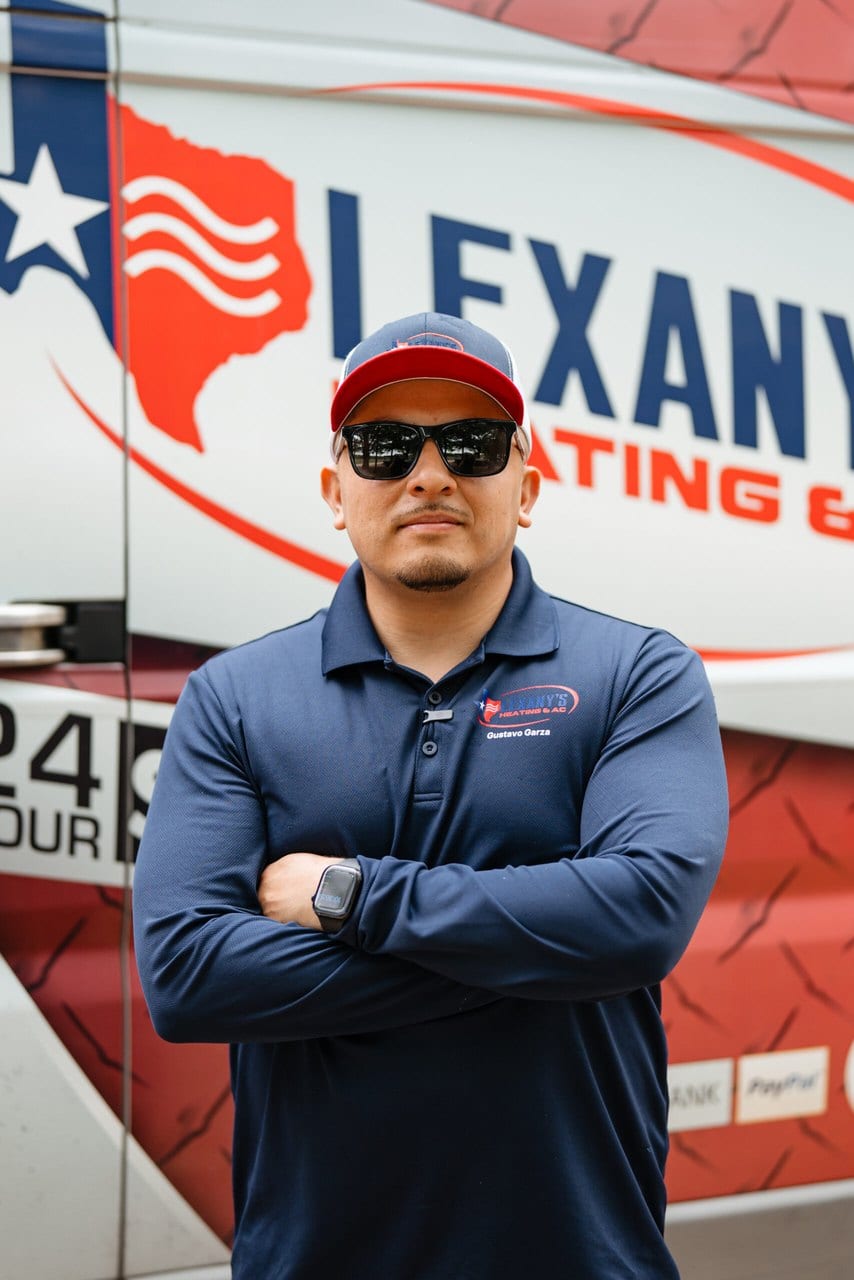
Owner of Lexany’s Heating & AC. Family-owned in Forney since 2011 — most days he’s the one on the truck doing the work himself. Bilingual (English/Spanish).