UV lights are one of the most asked-about indoor-air upgrades — and one of the most over-promised. The honest version: an HVAC UV light does real, useful work, but not the whole-house-disinfectant work the ads imply. Here’s what it actually does for a Forney home, where it helps most, and how it fits with the rest of clean-air.
What an HVAC UV light actually does
A UV light installed in your heating and cooling system uses ultraviolet-C energy to disrupt mold, bacteria, and some viruses on the surfaces it shines on and in the air that passes close to it. The key word is close. Air moves through your ducts quickly, so an in-duct lamp gets a brief shot at whatever’s passing by. That’s why the most valuable place for a UV light usually isn’t the open air at all — it’s a specific damp surface inside your system.
Where UV light helps most: the coil
Your indoor evaporator coil is cold and wet whenever the AC runs — perfect conditions for mold and biofilm to grow. That gunk restricts airflow, hurts efficiency, can clog the drain, and pushes musty air into your home. A UV lamp aimed at the coil shines on it continuously, keeping it clean and your system breathing freely. This is the job UV does best, and it benefits the whole system, not just the air for a split second.
The most reliable payoff from a UV light is a clean coil and drain pan — steadier airflow, better efficiency, and no musty smell. The air-disinfecting effect is a bonus on top of that.
What UV light can’t do
A UV light won’t capture dust, pollen, pet dander or smoke — it isn’t a filter, and it doesn’t trap particles. It won’t fix a humidity problem, and it isn’t a substitute for cleaning genuinely dirty ducts. And no in-duct lamp “sterilizes” all the air in your home, because the air simply doesn’t sit under it long enough. Anyone promising that is overselling.
UV vs. filtration vs. humidity — what each handles
How UV fits with the rest of clean-air
The best results come from layering the right tools, each doing its own job:
- Filtration to capture the particles you breathe.
- UV at the coil to keep the system clean and the air that passes it fresher.
- Humidity control so a muggy Texas summer doesn’t feed mold in the first place.
- Clean ducts when they genuinely need it — UV doesn’t replace that.
Put together thoughtfully, that’s a real indoor-air-quality plan. A UV light bolted on by itself, with no filtration or humidity strategy, is a partial fix.
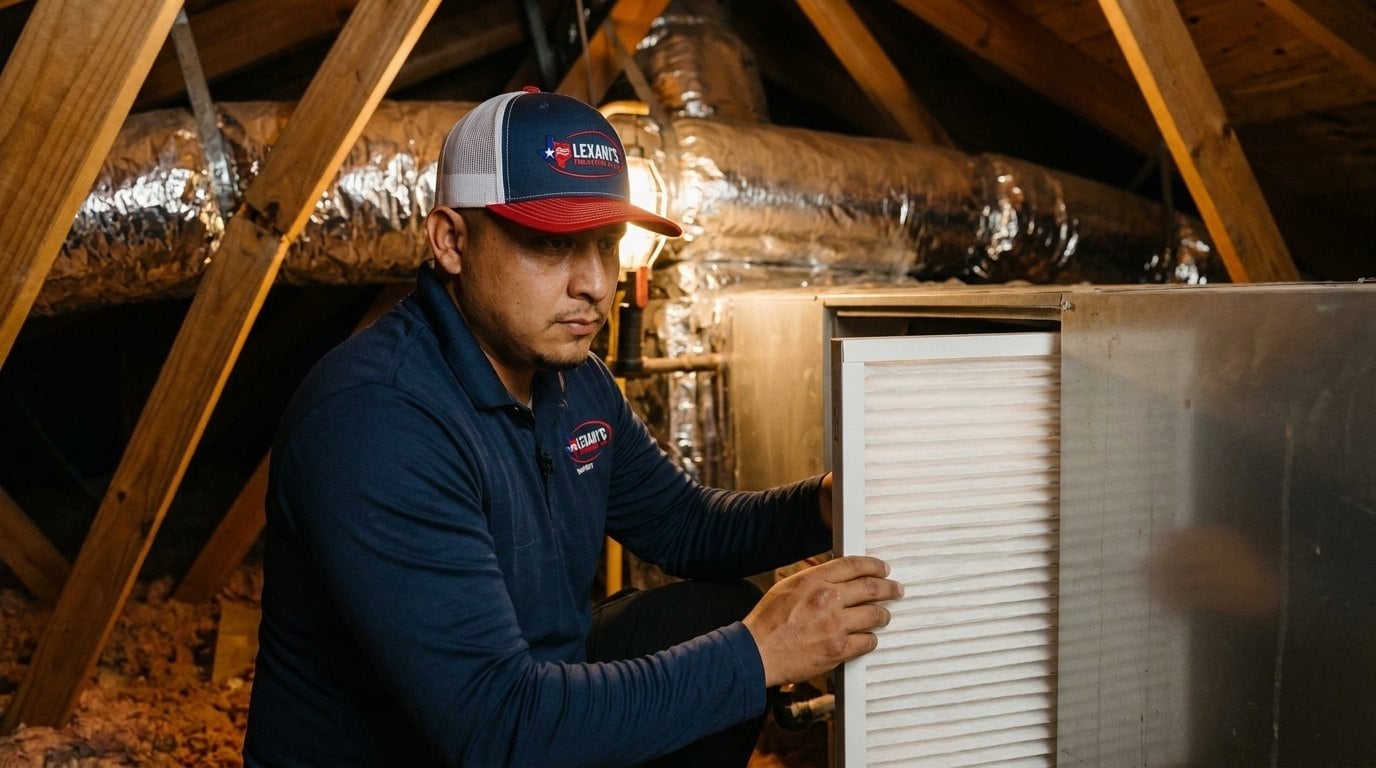
UV bulbs lose strength after about a year even while they still glow. We can check and swap yours during a seasonal tune-up so it keeps doing its job.
Is a UV light worth it for your home?
If your coil tends to grow mold, your home gets musty, or someone’s sensitive to it, a UV light at the coil is a sensible, fairly affordable upgrade — especially as part of a plan that also includes good filtration and humidity control. If your real issue is dust or allergies, your money is better spent on filtration first. We’ll look at your system and tell you honestly which clean-air step will help your home most — usually same-day, often from owner Gustavo himself.
UV Light FAQs
Does a UV light kill germs in my air?
An HVAC UV light reduces mold, bacteria and some viruses, but its biggest, most reliable job is keeping the indoor coil and drain pan clean — which keeps your whole system healthier. Air zips past an in-duct lamp quickly, so think of UV as one layer of clean-air, not a magic disinfectant for the whole house.
Where is the UV light installed?
Most often right at the evaporator coil inside the air handler, where it shines continuously on the damp surface that otherwise grows mold and biofilm. Some setups add a lamp in the ductwork. Placement matters, which is why it’s worth having it installed correctly.
Will a UV light help with allergies or dust?
Not directly — UV doesn’t trap particles. For dust, pollen and dander you want good filtration (the right MERV filter or a whole-home air cleaner). UV pairs well with filtration: the filter catches particles, the UV keeps the coil clean. They solve different problems.
How often does the UV bulb need replacing?
Typically about once a year. The lamp keeps glowing past its useful life but loses germ-killing strength, so it’s worth replacing on schedule — we can check it during a seasonal tune-up.

Owner of Lexany’s Heating & AC. Family-owned in Forney since 2011 — most days he’s the one on the truck doing the work himself. Bilingual (English/Spanish).