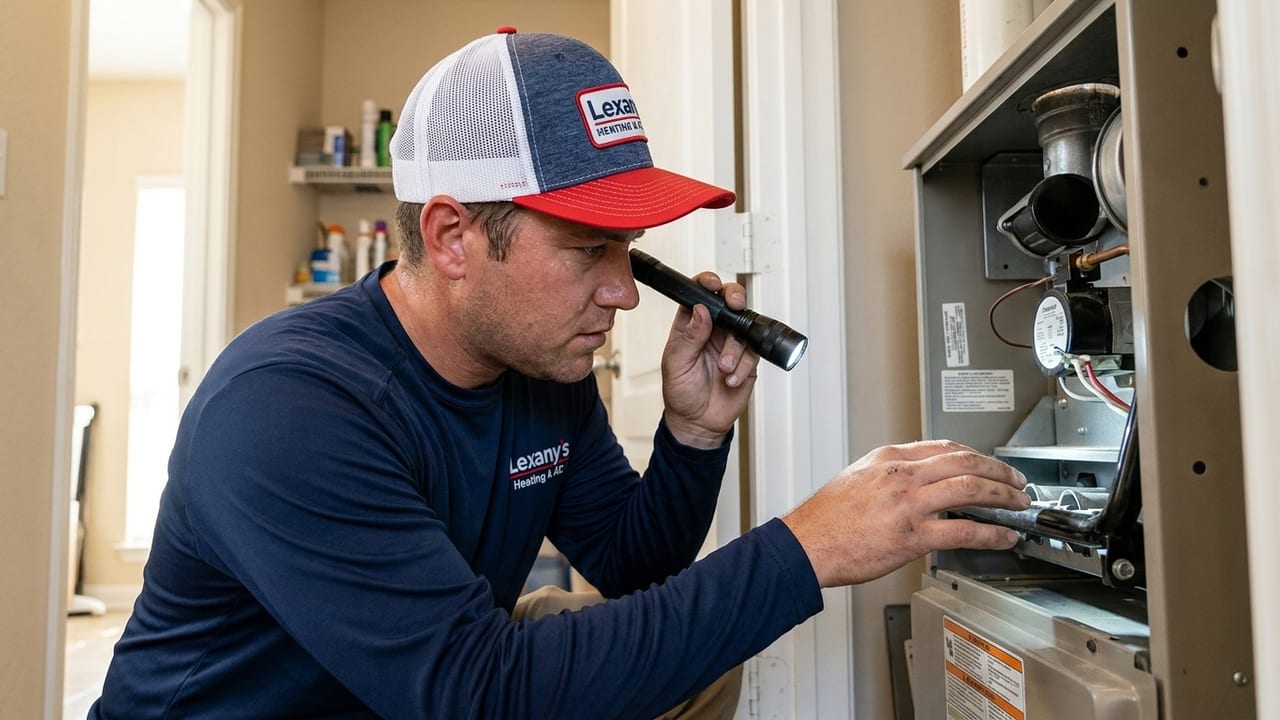
A heat pump is one of the most practical comfort systems you can put in a North Texas home — it heats and cools from a single outdoor unit, and our mild winters play right to its strengths. But “heat pump” covers a wide range of equipment, and the right one for your home isn’t always the one with the biggest number on the box. Here’s how they work and what actually matters when you choose.
How a heat pump actually works
A heat pump doesn’t make heat by burning fuel. It moves heat. In summer it pulls heat out of your house and dumps it outside — exactly like a regular air conditioner. In winter it runs in reverse, pulling heat out of the outdoor air (there’s usable heat in cold air, even when it doesn’t feel like it) and bringing it inside. Because it’s moving heat rather than creating it, it can deliver several units of warmth for every unit of electricity it uses.
That two-jobs-one-machine design is why a heat pump can replace both your AC and your furnace, and why it tends to be efficient in a climate like Forney‘s, where the deep cold is brief.
A heat pump is an air conditioner that can also run backwards to heat your home. One outdoor unit, year-round comfort — which is why it’s such a natural fit for North Texas.
Why heat pumps fit North Texas weather
Our long cooling season and short, mild winters are close to ideal for a heat pump. The unit earns its keep all summer doing the cooling you’d need anyway, and through most of the heating season it warms the house far more efficiently than electric resistance heat. On the handful of truly cold nights, a small amount of backup heat fills the gap. You get one system to maintain instead of two, and it’s working with our climate instead of against it.
Heat pump vs. a gas furnace, at a glance
The heat pump specs that actually matter
When you start comparing units, a few numbers and features tell you almost everything you need to know.
Efficiency ratings: SEER2 and HSPF2
SEER2 measures cooling efficiency; HSPF2 measures heating efficiency. Higher is better and means lower running costs, but there’s a point of diminishing returns — the jump from a baseline unit to a solid mid-tier model usually pays back far faster than chasing the highest-rated system on the market. We’ll help you find the sweet spot for your home and budget.
Single-stage, two-stage, or variable-speed
A single-stage unit is either full-blast or off. A two-stage or variable-speed unit can run at a lower output most of the time, which means steadier temperatures, quieter operation, and better humidity control through a muggy Texas summer. It costs more up front but is noticeably more comfortable.
Cold-weather and backup heat setup
For our area, what matters is how the system is configured for the rare hard freeze — a properly sized electric backup, or a dual-fuel pairing with a gas furnace. Done right, you never notice the handoff.
Why right-sizing your heat pump beats the badge
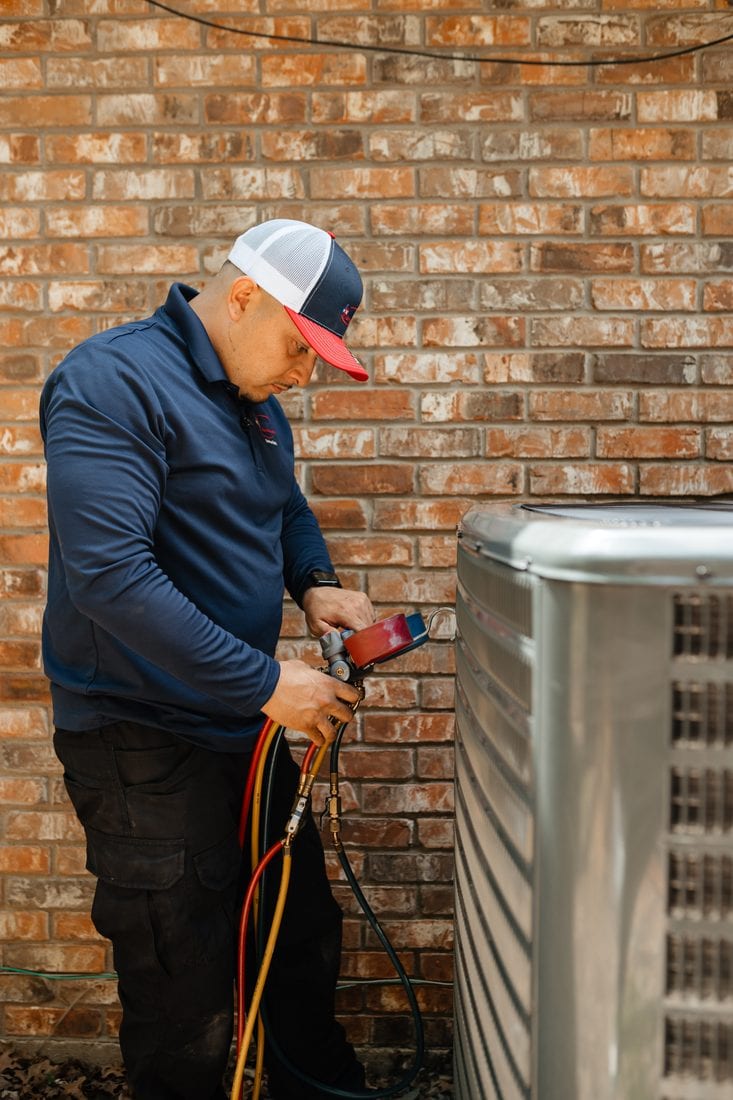
This is the part most homeowners never hear about, and it matters more than the brand name or the efficiency rating: a heat pump has to be sized to your actual home. An oversized unit short-cycles, leaves the air humid, and wears out early. An undersized one runs nonstop and still falls behind. Sizing depends on your square footage, insulation, windows, ductwork, and how your home faces the sun — not a rule of thumb.
- Start with a real load calculation, not “what was here before.” The old unit may have been the wrong size all along.
- Check the ductwork. Leaky or undersized ducts waste even the best equipment — sometimes that’s the real fix.
- Match the indoor and outdoor units. A mismatched coil quietly throws away the efficiency you paid for.
- Pick the staging that fits how you live — variable-speed if comfort and humidity control matter most.
- Plan the backup heat for our occasional freeze before the install, not after.
Brands we install and service
Goodman is our primary line — dependable, well-priced equipment with parts that are easy to get in North Texas, which keeps your future repair costs down. We also install and service the other major brands homeowners ask for, and we’ll give you a straight recommendation rather than steering you toward whatever’s on the truck. What matters far more than the logo is that the system is sized right and installed cleanly.
Because a heat pump works year-round, an honest seasonal tune-up — a cleaned coil and a checked charge — does more to protect efficiency than on a system that only runs half the year. No contract, just a smart spring or fall visit.
Is a heat pump right for your home?
For most Forney-area homes, a properly sized heat pump is a strong choice — efficient cooling all summer, efficient heating through our mild winters, and a single system to look after. If you have very low natural-gas rates or a specific reason to keep gas heat, a dual-fuel setup can give you the best of both. The honest answer depends on your home, and we’ll walk you through it before you spend a dollar. Most of the time you’ll talk to owner Gustavo himself — same day, with an upfront quote and no pressure.
Heat Pump FAQs
Will a heat pump keep my house warm on a cold North Texas night?
Yes. A properly sized heat pump handles the large majority of Forney-area winter days on its own, and modern units stay efficient well into the 30s and below. For the occasional hard freeze, systems are paired with electric backup heat (or set up as dual-fuel with a gas furnace) so you’re never left cold.
Which costs less to run here, a heat pump or a gas furnace?
It depends on your electricity and gas rates, but in a mild-winter climate like ours a heat pump is often very economical because it moves heat instead of burning fuel — and the same outdoor unit cools your home all summer. We’ll run the numbers for your home before you decide.
How long does a heat pump last?
With seasonal tune-ups, many heat pumps run well for roughly 12–15 years. Because the system works year-round, keeping the coil clean and the charge correct matters more than on a furnace that only runs in winter.
Can you replace just my outdoor unit?
Sometimes, but matching a new outdoor unit to an older indoor coil often loses efficiency and can void the warranty. We’ll tell you honestly whether a matched system or a single-component swap is the right call for your situation.

Owner of Lexany’s Heating & AC. Family-owned in Forney since 2011 — most days he’s the one on the truck doing the work himself. Bilingual (English/Spanish).