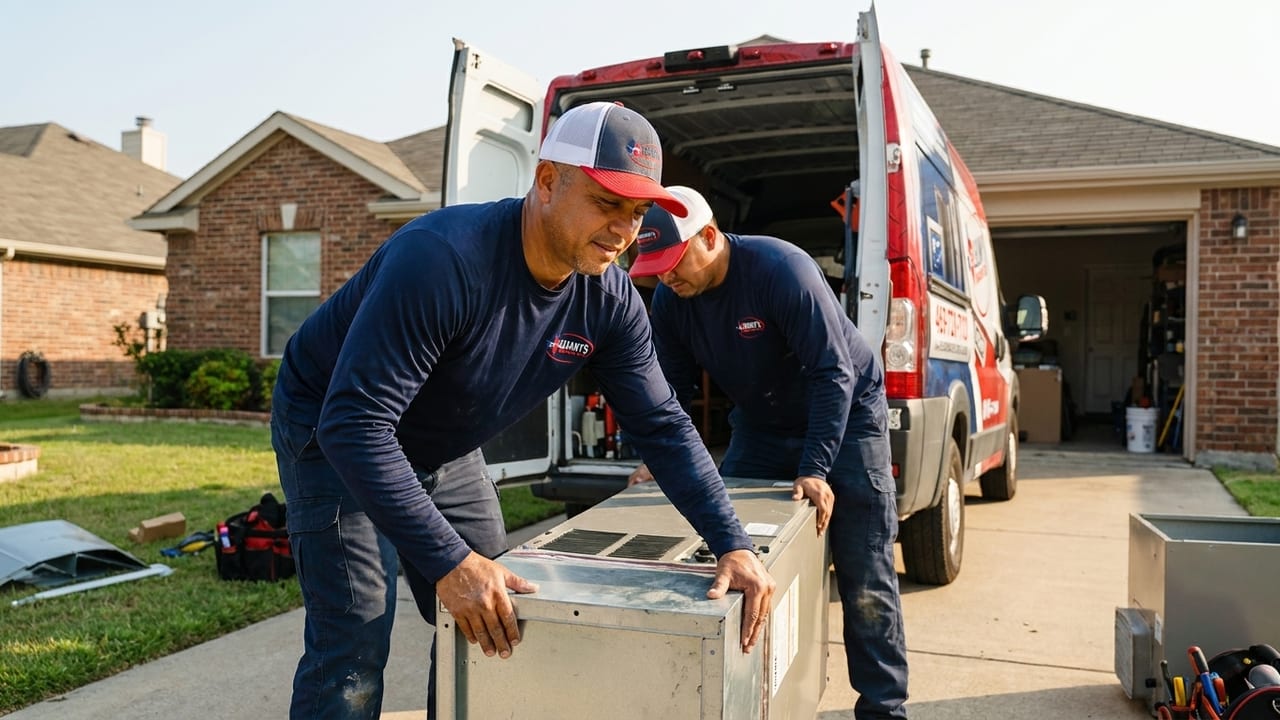
Homeowners asking “are Trane systems efficient?” usually want a yes or no. The honest answer is: Trane makes capable, well-regarded equipment across a range of efficiency tiers — but your real-world efficiency on any system, from any brand, comes down to right-sizing, a clean install, and keeping the system maintained. Here’s what to know before you buy or replace.
What Trane equipment is, plainly
Trane is one of the major American HVAC manufacturers and has a long history in the Texas market. Their residential line covers central air conditioners, heat pumps, and gas furnaces — from entry-level equipment up through high-efficiency variable-speed systems. They’re a brand we service regularly at Lexany’s. If you already have a Trane system and it’s running well, we’ll maintain and repair it. If you’re shopping for a replacement, Trane is one of several solid choices worth putting on a comparison.
One thing worth saying clearly: we don’t hold a dealer authorization for Trane. Our primary install line is Goodman — it’s dependable, parts are widely available in North Texas, and it’s a strong fit for most Forney-area homeowners. When you talk with Gustavo, he’ll give you an honest comparison of your options — not a pitch for whatever has the best margin that week.
Reading the efficiency numbers
The efficiency rating on any central AC or heat pump sold today is expressed as SEER2 — Seasonal Energy Efficiency Ratio 2. It measures how much cooling the system delivers, in BTUs, per watt-hour of electricity consumed, averaged across a full cooling season. A higher SEER2 means the same amount of heat removed from your home for less electricity.
For heating, the relevant numbers are HSPF2 (heat pumps, measuring heating efficiency) and AFUE (gas furnaces, expressed as the percentage of fuel converted to usable heat). Each one tells you the same basic thing: how much useful output you get for the energy you put in.
If you’re comparing a new quote to the number on your old system’s paperwork, they’re on slightly different scales — the 2023 test method update runs at tougher conditions, so SEER2 numbers run a bit lower than the equivalent SEER number for the same equipment. Don’t read the gap as a drop in performance. Ask us and we’ll show you the apples-to-apples comparison.
Trane makes a range, not one answer
Trane — like every major manufacturer — sells equipment across multiple efficiency tiers. Entry-level systems, solid mid-tier single-stage units, and high-end variable-speed models all carry the same brand name. The efficiency difference between the bottom and top of that range is substantial.
“Is Trane efficient?” is really asking which tier of Trane you’re looking at, and whether that tier makes sense for your home, your utility rates, and how long you plan to stay. That’s a conversation worth having with numbers on the table — not a question a brand name can answer by itself.
Where the efficiency gain is real
The meaningful efficiency gain typically comes from two moves: replacing an aging, undersized, or worn-out system with a solid mid-tier unit, and making sure that unit is sized and installed correctly. That first step alone — from a system losing efficiency at end of life to a properly installed mid-range replacement — is where most homeowners actually feel the savings on their bill.
Where the returns start to flatten
The jump from a solid mid-efficiency unit to the very highest-rated model on the market has a longer payback. The cost gap between those two tiers is real; the incremental efficiency gain is smaller. Whether it pencils out depends on how many hours the system runs, what you pay per kilowatt-hour, and how long you’ll be in the house. There’s no universal answer — but there is an honest one for your specific situation.
What actually drives real-world efficiency
This is the part that rarely shows up in a brand comparison — and it’s the most important thing to understand before you sign anything. The efficiency rating on a spec sheet is what the system achieves under controlled test conditions. What it does in your home depends on whether the fundamentals are in order.
How it fits a Forney home specifically
Forney sits in North Texas where the cooling season runs roughly April through October and summer highs regularly push into triple digits. That’s a lot of run hours on an air conditioner — which means the efficiency rating has a real effect on the power bill over a full season. It also means a system that was sized or installed wrong will be stressed from the beginning.
Winters here are comparatively mild. If you’re evaluating a heat pump, the HSPF2 number matters — but heating costs are modest in Forney compared to what you’ll spend cooling from May onward. If you’re looking at a gas furnace, a mid-efficiency model often makes more financial sense here than chasing the highest AFUE tier, simply because the furnace doesn’t run for very many hours per year. The math looks different than it would in a cold northern climate.
The install story in a hot climate
In a market this warm, one install mistake we see repeatedly is pairing a new condenser with an old coil inside. It can silently throw away a significant chunk of the efficiency you paid for — and may void the manufacturer warranty. Matching the indoor and outdoor units correctly is not optional; it’s the baseline. We also run a real load calculation before every install rather than assuming “the same tonnage as before” is the right answer. The previous unit may have been the wrong size to begin with.
No matter which brand you go with, a seasonal tune-up once or twice a year — cleaned coils, confirmed refrigerant level, checked electrical connections — is what keeps the system actually performing at the number on the label. No contract to sign. Just honest, straightforward service when it makes sense.
How we can help you sort it out
When you call Lexany’s, you’re most often talking directly to Gustavo — and most days he’s the one doing the work. He’ll look at what you have, measure the actual load on your home, and give you a straight recommendation with an upfront quote. If your Trane system is running well and just needs a tune-up or a repair, he’ll tell you that. If it’s time to replace, he’ll give you a real comparison of your options — including what we install as our primary line — and let you decide.
We’re NATE-certified, licensed in Texas (TX A/C #51447), bilingual in English and Spanish, and we do same-day service across Forney and the surrounding area. Gustavo has been in Forney for eight years and the business has been family-owned since 2011. Reach us at 469-728-7113.
Trane Efficiency FAQs
Is Trane better than other brands for a hot Texas climate?
Trane makes capable equipment and has a long track record in North Texas. Whether it outperforms another brand in your home depends far more on the efficiency tier you choose, the size matched to your home, and the quality of the install than on the badge. We service Trane systems regularly and can give you an honest comparison against what we install as our primary line.
Do you install Trane systems?
We service Trane systems. Goodman is our primary install line — it’s dependable, well-priced, and parts are widely available locally, which matters a lot when something needs attention years down the road. If you already have a Trane system and it’s running well, we’ll service it. If you’re replacing, we’ll walk you through an honest comparison of your options.
What efficiency rating should I look for on a Trane system in Texas?
The relevant rating for cooling is SEER2 — and for a Forney home, a solid mid-tier SEER2 unit will usually give you better payback than chasing the highest-rated model on the market. The gap in price between mid and top-tier is significant; the gap in energy savings is smaller. We’ll run the honest math for your home before you decide.
Does the SEER2 rating on the box mean that’s what I’ll get at home?
Not automatically. The rating reflects what the system can do under test conditions. What it actually delivers in your home depends on whether it was sized correctly, whether the indoor and outdoor units are properly matched, whether the refrigerant charge is right, and whether the ductwork is in reasonable shape. A system installed right will get close to its rated efficiency; one installed sloppily won’t — regardless of the brand.
How long does a Trane system last with regular tune-ups?
With seasonal tune-ups and reasonable care, most systems in this climate run 12–16 years. Trane equipment is no exception. The single biggest factor in longevity is usually whether the system was sized right to begin with — not the brand name on the cabinet.

Owner of Lexany’s Heating & AC. Family-owned in Forney since 2011 — most days he’s the one on the truck doing the work himself. Bilingual (English/Spanish).