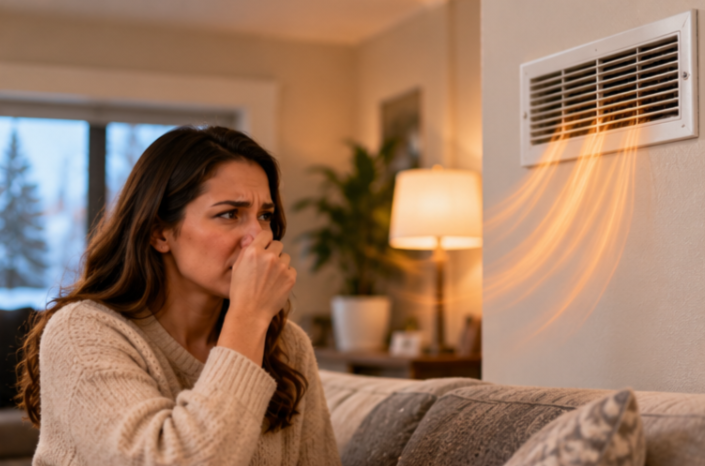
The first time your Forney heat pump switches from cooling to heating, a brief burnt or dusty smell can be unsettling, especially after the system has sat in heating mode for months. In some cases, the odor comes from dust warming up on components that have been inactive since spring. But the smell's strength, duration, and character matter.
A smell that fades after the first few minutes is different from an odor that continues through several heating cycles, smells like melting plastic, or comes with smoke, unusual noise, or electrical problems. Knowing what is normal for a heat pump and what signals a potential fault can help you decide whether to keep the system running, turn it off, or schedule a professional inspection.
Is a Burning Smell Normal When a Forney Heat Pump First Runs?
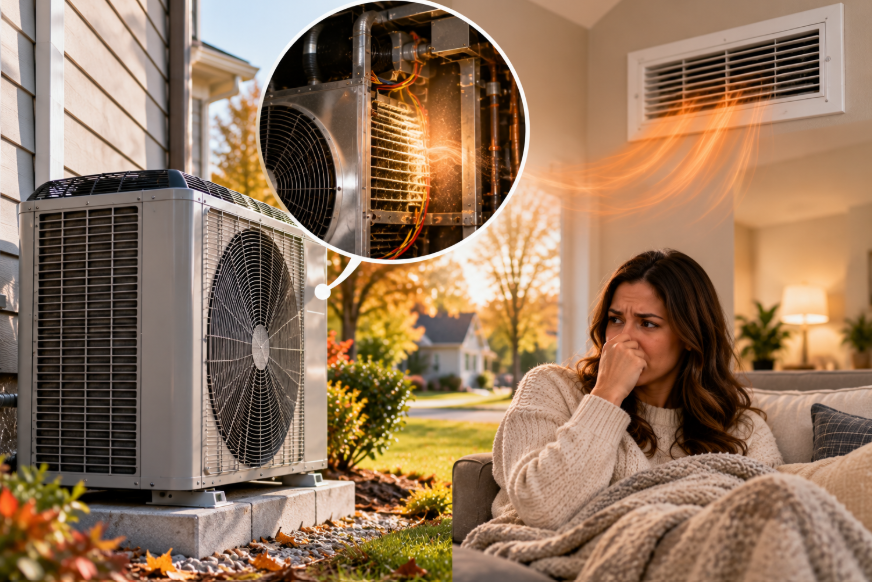
Yes, a brief dusty or slightly scorched smell can be normal when a heat pump provides heat for the first time after months of cooling. Forney's mild fall weather can make this especially confusing because the heat pump may run in heating mode without immediately using its electric backup heat.
A heat pump does not create heat by burning fuel. It moves heat between the indoor and outdoor sides of the system using the compressor and refrigerant circuit. The burning odor usually comes from another component: the electric heat strips inside the indoor air handler.
Those strips can sit unused for much of the year. Dust, pet dander and other fine particles can settle on or around them during the cooling season. When the strips finally energize, those deposits heat up and produce the familiar dusty smell.
A normal first-use odor generally has these characteristics:
- It appears shortly after heating components begin operating.
- The smell is dusty, warm, or slightly scorched rather than chemical.
- It becomes noticeably weaker within about 20 to 30 minutes.
- It disappears after the first few heating cycles.
- There is no smoke, haze, unusual noise, or electrical odor.
If the smell follows that pattern, there may be nothing wrong with the heat pump. If it continues into subsequent heating cycles or becomes stronger instead of weaker, the system deserves closer attention.
What Is Actually Causing the Burnt Smell?
The source of the smell matters because a heat pump's normal heating process is fundamentally different from a gas furnace. The refrigerant circuit itself does not burn fuel to produce heat, so an odor coming from the indoor unit usually points toward dust or an electrical or mechanical component.
Electric backup heat strips are typically rated from about 5 to 20 kilowatts, depending on the system. When energized, the resistance elements become extremely hot and transfer that heat to the air moving through the air handler. Any dust sitting on those components can burn away during the first few heating cycles.
That also explains why the smell can seem stronger than expected. The heat strips are deliberately producing high temperatures, and they may have been sitting unused since the previous spring.
The situation becomes more concerning when the odor comes from a component that should not be getting excessively hot.
| What You Smell or Notice | What It May Indicate |
|---|---|
| Warm, dusty smell that fades quickly | Normal dust burn-off from heating components |
| Sharp electrical or acrid odor | Possible overheating connection or electrical component |
| Burning plastic smell | Possible overheated wiring, insulation, or motor component |
| Fishy or chemical-like electrical odor | Possible overheating electrical insulation |
| Hot-metal smell every heating cycle | Possible airflow restriction or overheating heat strips |
| Rotten-egg or sulfur smell on a dual-fuel system | Possible natural gas leak |
The character of the odor should never be considered by itself. Duration, airflow, system behavior, and visible signs all help determine whether the smell is part of normal seasonal startup or evidence of a developing problem. If the symptoms persist or point to an equipment issue, heat pump repair in Forney can help identify and address the underlying cause.
Why Can the Smell Appear Weeks After Switching to Heat?
This is one of the most confusing parts of heat-pump operation for homeowners. You can switch the thermostat to heating in October, use the system several times without any smell, and then suddenly notice a burnt odor weeks later.
The reason is that selecting HEAT does not necessarily activate the electric heat strips. During mild weather, the heat pump can often provide the required heating without backup heat. The strips may remain completely inactive until outdoor conditions become colder or the system needs additional capacity.
For a Forney home, that can create a significant delay between the first use of heating mode and the first use of the backup strips. A homeowner might turn the thermostat to heat in early fall, while the first genuinely cold morning several weeks later is what finally activates the components that have been sitting unused since spring.
Heat strips can also operate during certain defrost cycles or when the thermostat calls for additional heat.
That means a burnt smell appearing later in the season does not automatically mean a new failure has developed. It may simply be the first time those electric heating elements have become hot enough to burn off accumulated dust.
How Long Should Normal Dust Burn-Off Last?
Duration is one of the most useful clues available to a homeowner because normal dust burn-off should not continue indefinitely. You do not need specialized equipment to monitor it. Pay attention to what happens during the first cycle and whether the odor returns afterward.
A normal startup smell should generally:
- Become noticeable within the first several minutes.
- Weaken substantially within roughly 20 to 30 minutes.
- Disappear after the first two or three heating cycles.
- Smell dusty, warm, or mildly scorched rather than chemical.
- Occur without visible smoke or haze.
- Become less noticeable each time the system runs.
If the odor is still strong after several cycles, returns every time the heat operates, or becomes stronger as the system runs, do not keep assuming it is dust.
A persistent smell can indicate restricted airflow, an overheating electrical connection, a blower problem, or another component operating outside normal conditions. That is the point where a professional diagnosis becomes more useful than simply waiting for the smell to disappear.
Which Burning Smells Should Concern You?
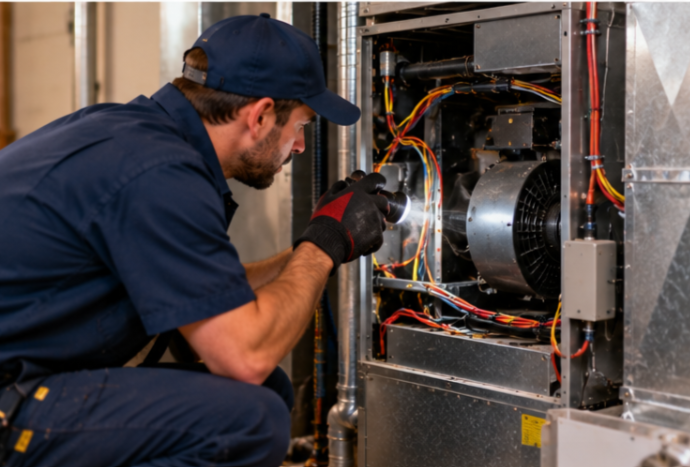
Not every unusual odor means an emergency, but certain smells deserve a more cautious response. Electrical components, motors, wiring insulation and heat strips can all produce different odors when they are overheating, and the system's behavior can provide additional clues.
Sharp Electrical Smell
A sharp, acrid odor that resembles hot wiring is different from ordinary dusty startup. It can indicate an overheating electrical connection, contactor, wiring component, or other part that should not continue heating.
Burning Plastic Smell
A plastic odor can indicate that insulation or a plastic component is being exposed to excessive heat. If it continues or becomes stronger, turn the system off rather than allowing it to run repeatedly.
Fishy or Chemical Odor
An unusual fishy smell can sometimes come from overheating electrical insulation. It may not smell like traditional "burning," which is why homeowners sometimes overlook it.
Hot-Metal Smell Every Cycle
If the same hot-metal odor appears every time the heat operates, airflow should be considered. A restricted filter, blocked return, closed registers, or another airflow problem can cause heating components to operate hotter than intended.
Rotten-Egg Smell on Dual Fuel
This is a different situation. A dual-fuel system includes a gas furnace, so a rotten-egg or sulfur odor can indicate a possible natural gas leak. Leave the home and contact the gas utility or appropriate emergency service from outside rather than troubleshooting the furnace yourself.
The presence of smoke, haze, scorching, repeated breaker trips, or a strong electrical smell is also a reason to shut the system down and have it inspected.
What Should You Do When Your Heat Pump Smells Burnt?
Before assuming the worst, look at the simple factors that can affect airflow and determine whether the odor is fading normally. These checks do not replace an electrical or mechanical inspection, but they can give you useful information about what is happening.
Check the Air Filter
A heavily loaded filter restricts the amount of air moving across the heating components. Check the filter and replace it if it is dirty or overdue.
Make Sure Returns Are Clear
Furniture, boxes, rugs, and other objects can restrict return-air openings. A heat pump needs adequate airflow through the entire system to move heat safely and efficiently.
Check the Supply Registers
Make sure registers that may have been closed during cooling season are open. Restricted airflow can contribute to higher operating temperatures and recurring hot-metal odors.
Track the Smell
Note when the odor begins, how long it lasts, and whether it returns during the next heating cycle. That information can help a technician determine whether the smell is connected to backup heat, the blower, or another component.
Shut It Down If the Smell Is Electrical
If the odor is sharp, chemical, fishy, or accompanied by smoke, haze, unusual sounds, or a repeatedly tripping breaker, stop operating the system and arrange for professional service.
These steps can help separate normal first-use dust from a developing problem, but they should not involve opening the electrical cabinet or attempting to tighten wiring. Components inside the air handler can remain hazardous even when the thermostat is switched off.
Can a Dirty Filter Make the Burning Smell Worse?
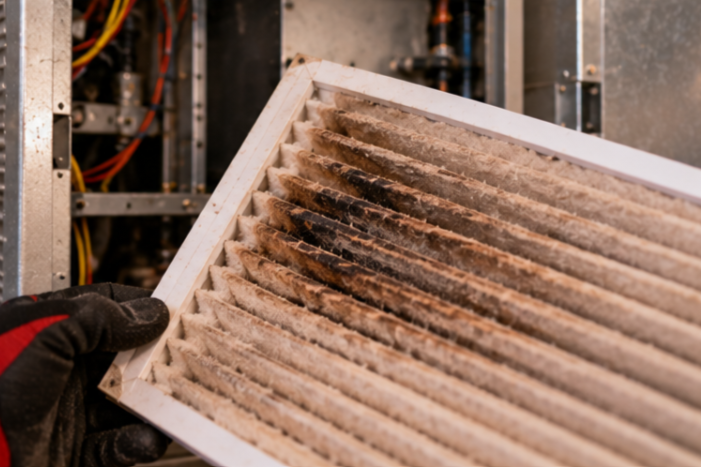
Yes. Electric heat strips depend on adequate airflow to transfer their heat into the air stream. When a filter is heavily restricted, the system has a harder time moving that heat away from the elements, which can contribute to higher temperatures and stronger odors.
A restricted filter can also contribute to repeated high-limit trips. The system may heat, shut down for protection, cool slightly, and then attempt to operate again. That repeated cycle can make the odor seem as though something is continuously burning.
Forney homeowners can reduce the chance of this problem by keeping the filter and return-air path in reasonable condition.
- Check a standard one-inch filter approximately once a month.
- Replace it about every three months under typical conditions.
- Consider checking it every six to eight weeks with pets or heavy dust.
- Replace an old filter before the main heating season begins.
- Use the filter size and rating appropriate for your system.
- Install the filter with the airflow arrow pointing toward the blower.
A higher MERV number is not automatically better for every HVAC system. A filter that is too restrictive for the equipment can reduce airflow, so the appropriate choice depends on the system and its design.
Does a Dual-Fuel Heat Pump Need a Different Response?
Yes. A dual-fuel system combines an electric heat pump with a gas furnace, so the source of the heat can change as outdoor conditions change. That introduces combustion-related concerns that do not apply to a heat pump using electric backup strips.
If your Forney home has a dual-fuel system, pay attention to these warning signs:
- Rotten-egg or sulfur odor requires immediate attention for a possible gas leak.
- Soot around burners or the furnace cabinet should be professionally evaluated.
- A yellow or abnormal burner flame warrants inspection.
- Rust or visible deterioration around combustion components should not be ignored.
- Carbon monoxide protection is important wherever gas-burning equipment is installed.
A cracked heat exchanger can also be dangerous without producing a distinctive smell, which is why combustion equipment should not be judged by odor alone.
If you are unsure whether your system is all-electric or dual-fuel, look for a gas line connected to the indoor furnace equipment. If your system does use gas backup, heating installation and replacement can address the broader equipment and changeover requirements.
Normal or Not? Use These Five Clues
The easiest way to judge a burnt smell is to consider several signs together instead of focusing only on how strong the odor seems.
| Factor | More Consistent With Normal Dust | More Consistent With a Problem |
|---|---|---|
| Duration | Fades within 20–30 minutes | Continues through several cycles |
| Recurrence | Disappears after first few uses | Returns every time heating starts |
| Odor | Dusty or mildly scorched | Electrical, chemical, plastic, or fishy |
| Airflow | Strong and consistent | Weak or noticeably restricted |
| Other symptoms | No unusual behavior | Smoke, noise, scorching, or breaker trips |
If the odor is fading and the system is otherwise operating normally, there is usually little reason to panic. If it is persistent, recurring, or accompanied by another symptom, the safest approach is to stop treating it as ordinary dust and determine what is actually causing it.
FAQs
1. Why does my Forney heat pump smell burnt when I turn on the heat?
A brief dusty or slightly scorched smell can come from dust burning off the electric heat strips after months of inactivity. The odor should fade within the first few heating cycles. If it smells like burning plastic, electrical wiring, or becomes stronger instead of fading, shut the system down and have it inspected.
2. How long should a burnt smell last when a heat pump starts heating?
Normal dust burn-off should generally become weaker within about 20 to 30 minutes and disappear after the first few heating cycles. If the smell continues every time the heat runs, lasts significantly longer, or is accompanied by smoke, unusual noises, or weak airflow, it may indicate an equipment or airflow problem.
3. Can a dirty air filter cause my heat pump to smell like it is burning?
Yes. A heavily restricted filter can reduce airflow across the heating components and contribute to higher operating temperatures. Check the filter before running the system extensively. If the filter is clean but the burnt odor continues, the problem may involve the heat strips, blower, electrical components, or another part of the system.
4. Is a burning plastic or electrical smell from a heat pump dangerous?
A persistent plastic, fishy, or sharp electrical odor should not be treated like normal dust. It can indicate overheating wiring, insulation, electrical connections, or another component. Turn the heat pump off and arrange for professional inspection, particularly if you also notice smoke, scorching, unusual sounds, or a repeatedly tripping breaker.
5. Why does my heat pump smell burnt only when backup heat turns on?
The electric backup heat strips can remain unused for much of the year, even when the thermostat is already set to heating. When colder conditions cause the strips to energize, accumulated dust can produce a temporary burnt or dusty odor. If the smell returns every time backup heat operates, the system should be evaluated.
Why Forney Homeowners Call Lexany's When a Heat Pump Smells Burnt
A brief dusty odor during the first use of electric backup heat can be completely normal, but persistent or electrical-smelling odors deserve a proper diagnosis. The goal is to identify the source rather than replace parts based solely on the smell.
Lexany's Heating & AC has been family-owned in Forney since 2011, holds Texas A/C license #51447, and has NATE-certified technicians. The company has a 4.9-star rating across more than 390 Google reviews, with same-day and after-hours service available and upfront pricing before work begins.
A heat-pump diagnosis can include the heat strips, sequencers, limit controls, blower motor and wheel, electrical connections, airflow, and defrost operation. If the issue is isolated to the heat pump itself, our heat pump repair in Forney service can address the underlying problem. For broader heating-system issues, heating repair in Forney is another option.
If your Forney heat pump smells burnt for more than a few cycles, produces a sharp electrical odor, shows smoke, or repeatedly trips a breaker, shut it down and call (469) 728-7113. Getting the cause identified early can help prevent a minor heating problem from becoming a larger equipment failure.

Owner of Lexany's Heating & AC. Family-owned in Forney — most days he's the one on the truck doing the work himself. Bilingual (English/Spanish).