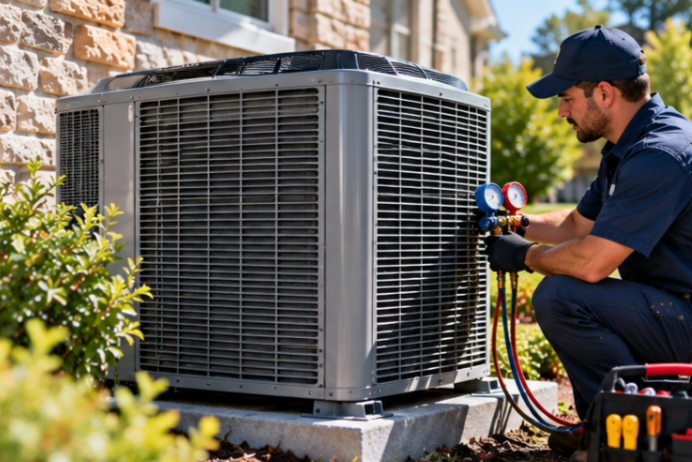
A Forney air conditioner can spend months working through long stretches of Texas heat, often running for hours on the hottest afternoons just to keep the house comfortable. By the end of summer, the important question is not simply how hard the system worked, but whether that extended runtime exposed a developing problem.
Before switching from cooling to heating, it is worth looking at how the system performed, whether your energy use changed, and whether you noticed weak airflow, unusual sounds, longer cycles, or uneven temperatures. This guide explains what a demanding summer can reveal about your HVAC system, which signs justify maintenance now, and when a Forney homeowner may reasonably wait.
Why Does a Long Forney Summer Matter to Your HVAC System?

The number of hot days matters because HVAC components experience wear through both operating hours and the conditions under which they operate. When outdoor temperatures stay extremely high, the condenser has to reject more heat while the compressor and electrical components continue cycling to maintain indoor comfort.
This summer was particularly demanding across the DFW area. The source material for this article records 52 days at or above 100°F, including extended periods when overnight temperatures also remained unusually high. When nights stay hot, the system gets less opportunity to recover between daytime cooling cycles.
That extra workload does not automatically mean something has failed. It does, however, make certain components more worth checking at the end of the season:
- Capacitors can weaken after prolonged exposure to high temperatures.
- Contactor points can develop pitting from repeated electrical cycling.
- Condenser coils collect grass, dust, cottonwood and outdoor debris.
- Evaporator coils can become restricted when filtration is inadequate.
- Condensate drains accumulate biological buildup during months of cooling.
- Electrical connections experience repeated expansion and contraction from thermal cycling.
The important distinction is between wear and failure. A capacitor can still start a compressor while measuring below its rated value. A partially restricted drain can still remove water until one particularly humid day pushes it beyond its capacity. Those conditions are much easier to address before they become an emergency.
Which Summer Warning Signs Mean Your HVAC Needs Attention?
Your own experience with the system is one of the most useful pieces of information a technician can have. Think back over the last few months rather than judging the equipment only by whether it still turns on. Changes in performance often appear before a component fails completely.
Pay particular attention to symptoms that appeared repeatedly rather than once during an unusually hot afternoon. A single long cooling cycle during extreme weather is not necessarily concerning. A system that repeatedly struggled under conditions it previously handled comfortably tells a different story.
| What You Noticed During Summer | What It May Indicate |
|---|---|
| The home struggled to reach the thermostat setting | Airflow, refrigerant, capacity or heat-transfer problem |
| Electric bills increased beyond what the weather explains | Reduced efficiency or longer-than-normal runtime |
| The outdoor unit became noticeably louder | Fan, motor, bearing or loose-component issue |
| The system tripped a breaker | Electrical or compressor-related problem requiring diagnosis |
| Water appeared near the indoor unit | Restricted condensate drainage or pan problem |
| Airflow became weaker at several registers | Filter, coil, blower or duct restriction |
| Cooling became uneven between rooms | Airflow imbalance or developing system issue |
| The system began cycling unusually often | Thermostat, airflow, sizing or equipment problem |
One symptom does not automatically identify the failed component. For example, a higher electric bill can result from weather, thermostat settings, restricted airflow, a dirty condenser, or equipment performance. That is why a useful maintenance visit should measure the system rather than simply sell a list of replacement parts.
If the system struggled repeatedly this summer, AC repair in Forney may be more appropriate than treating the problem as routine maintenance. Maintenance can uncover developing issues, but it should not be used as a substitute for diagnosing an existing fault.
What Should an End-of-Summer HVAC Maintenance Visit Actually Check?
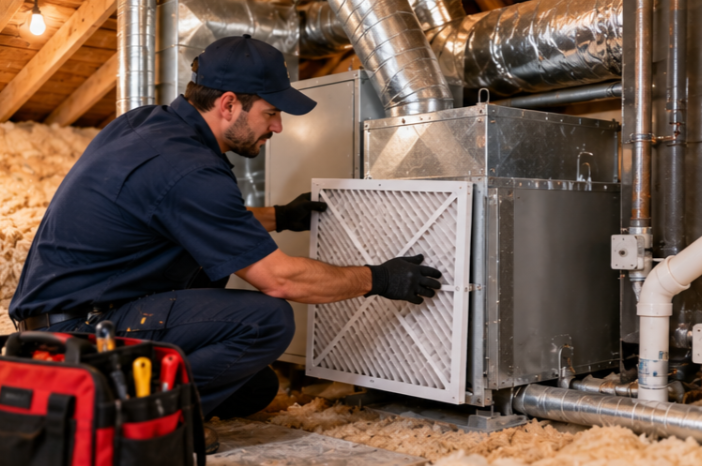
A meaningful post-summer inspection should tell you how the system is performing, not simply confirm that the equipment is present and operational. The technician should measure important operating conditions, inspect components affected by summer workload, and explain anything that falls outside the manufacturer's expected specifications.
Test the Capacitor and Contactor
A capacitor should be tested against its rated microfarad value rather than judged by appearance. A weakened capacitor may continue starting the equipment for a while before finally failing. The contactor should also be inspected for pitting, burning, or other signs of excessive electrical wear.
Check Coils and Temperature Split
The evaporator and condenser coils need to be reasonably clean so the system can transfer heat effectively. A technician can also measure the temperature difference between return and supply air. A typical cooling temperature split is often around 16 to 22°F, although the correct reading depends on system design and operating conditions.
Clear the Condensate Drain
Your AC removes moisture from indoor air every time it operates. Months of cooling can allow biological buildup to accumulate inside the condensate drain. If the line becomes restricted, water can back up into the drain pan, trigger a safety switch, or eventually create water damage around the indoor equipment.
Inspect Electrical Connections and Refrigerant Performance
Thermal cycling can affect electrical connections over time, while refrigerant performance should be evaluated using appropriate measurements rather than simply adding refrigerant because the system appears to be struggling. A system that is genuinely low on refrigerant has an underlying reason for the loss that should be investigated.
Check the Outdoor Condenser
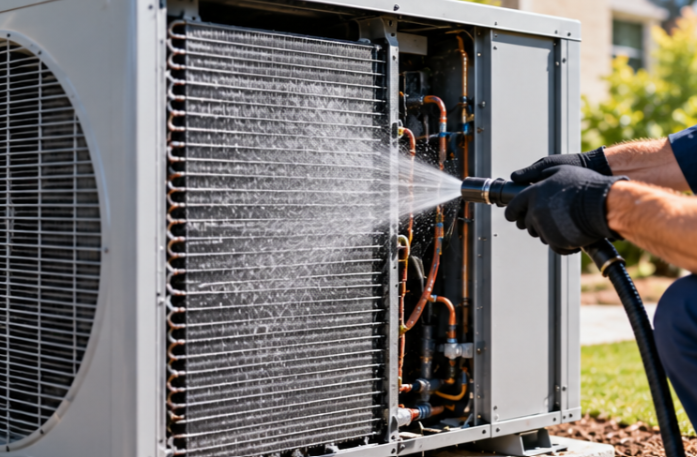
The outdoor unit should be inspected for accumulated grass, leaves, cottonwood, dust, bent fins, and restricted airflow around the cabinet. The condenser needs to release heat into outdoor air, so a unit crowded by vegetation or restricted by debris can work harder than necessary during already difficult operating conditions.
A good AC maintenance and tune-up should therefore involve measurements and component checks rather than simply replacing a filter and washing the outdoor cabinet.
Does Your Heating System Need to Be Checked Too?
This depends on whether your Forney home uses a gas furnace, heat pump, or dual-fuel system. The distinction matters because an air-conditioning maintenance visit does not automatically verify every component responsible for winter heating, particularly when the heating equipment has remained unused for months.
If you have a gas furnace, the heating side has its own ignition, combustion, airflow, and safety components. A fall inspection should include the ignition sequence, burners, blower, filter, control board, limit switches, gas valve response, flame sensor, and applicable pressure or safety switches.
If your home has a heat pump, the same outdoor equipment that cooled your house all summer will also provide heating. That makes the end of summer particularly relevant because the system is about to change operating modes.
A heat pump inspection should verify:
- Heating and cooling changeover
- Reversing valve operation
- Defrost-cycle operation
- Refrigerant performance in heating mode
- Auxiliary or emergency heat
- Thermostat staging
- Indoor and outdoor airflow
A dual-fuel system deserves attention on both sides, including confirmation that the system changes between the heat pump and furnace correctly. For homeowners with a gas furnace, furnace maintenance in Forney is a separate consideration from the cooling-side maintenance your system may have received earlier in the year.
When Can a Forney Homeowner Reasonably Wait?
Not every HVAC system needs immediate maintenance after summer. If your equipment is relatively new, was professionally serviced recently, maintained the thermostat setting throughout the heat, and showed no unusual changes, waiting until the next scheduled service may be reasonable.
Your decision should be based on the condition and history of the system rather than the calendar alone. Consider waiting if most of these statements accurately describe your equipment:
- It received professional maintenance earlier this year.
- It maintained indoor temperature throughout the summer.
- Energy use generally followed the weather and household habits.
- The system did not trip breakers.
- You did not notice new noises or unusual odors.
- Airflow remained consistent throughout the house.
- No water appeared around the indoor equipment.
- The outdoor condenser remains clean and unobstructed.
- The equipment is relatively new and operating normally.
- You know when it was last professionally inspected.
The opposite is also true. If several of those points do not describe your system, a fall inspection becomes more useful because you already have evidence that something changed.
The source draft identifies eight years or more as one factor that can make a fall check more worthwhile, while a system under five years old with recent professional service may present less reason for immediate attention when it has performed normally. Age alone, however, should not determine whether equipment needs repair or replacement.
What Can Happen If You Wait Until the Next Cold Snap?
Waiting does not guarantee that your system will fail. The concern is that a component already showing weakness may be asked to operate under conditions that expose the problem when you have less time to respond.
A weak capacitor may continue operating until the compressor or fan cannot start. A partially blocked drain can remain unnoticed until the next cooling cycle produces enough condensate to overflow. A furnace ignition component can appear perfectly fine for months because nobody has asked it to fire.
There are also practical timing considerations in Forney and the wider DFW area. The source material places the average first freeze around November 22, which means October is often a useful window for identifying heating problems before the first sustained cold-weather demand.
| Situation | Why Checking Now Can Help |
|---|---|
| Weak capacitor | Gives time to replace it before a no-cooling call |
| Restricted condensate drain | Reduces risk of an indoor water problem |
| Poor airflow | Allows the restriction to be diagnosed before winter operation |
| Furnace ignition issue | Provides time to repair before heating demand rises |
| Heat-pump changeover problem | Confirms heating operation before cold weather |
| Developing electrical issue | Allows diagnosis before heavier seasonal demand |
The point is not that every homeowner needs a fall tune-up. It is that timing gives you more options if your system does have a problem.
Frequently Asked Questions
How long does a full HVAC maintenance visit take?
A thorough maintenance visit covering both cooling and heating typically takes around 60 to 90 minutes, although the appointment can take longer when a technician finds a problem that requires additional testing or diagnosis.
Is fall too early to check my furnace?
No. Fall can be a practical time to identify ignition, airflow, safety-control, or other heating problems while there is still time to schedule repairs. Waiting until the first major cold front can mean less convenient scheduling and longer waits for parts or service.
How often should my HVAC system be maintained?
Many systems benefit from maintenance approximately twice a year, with one visit before the cooling season and another before heating season. The appropriate schedule depends on the equipment, age, operating conditions, manufacturer requirements, and the home's usage.
What can I safely check myself?
You can replace the air filter, keep vegetation and debris away from the outdoor condenser, and make sure the thermostat changes between heating and cooling normally. Refrigerant, gas components, internal electrical components, and other specialized work should be handled by a qualified technician.
Does a higher summer electric bill automatically mean my HVAC needs repair?
No. Extreme weather, thermostat settings, occupancy, utility rates, and other household factors can increase energy use. However, a bill increase combined with longer cycles, weak airflow, uneven cooling, or other performance changes is a reasonable reason to have the system evaluated.
Why Choose Lexany's Heating & AC for HVAC Maintenance in Forney?
After a long Forney summer, the goal of maintenance is not to sell work your system does not need. It is to find out whether months of heavy cooling have affected airflow, electrical components, refrigerant performance, drainage, or other parts of the system before another season begins.
Lexany's Heating & AC has been family-owned in Forney since 2011, holds Texas A/C license #51447, and has NATE-certified technicians. Our air conditioning maintenance service includes checking key operating components and measuring system performance so you can understand the condition of your equipment.
If the inspection identifies a problem rather than routine wear, we can explain the finding and the available repair options before work begins. For systems already showing weak cooling, unusual noises, higher energy use, or repeated problems, our AC repair service can address the underlying issue rather than treating the symptom.
If your HVAC system worked especially hard this summer or has not been professionally checked recently, fall is a practical time to find out where it stands. Call (469) 728-7113 to schedule service and prepare your Forney home for the season ahead.

Owner of Lexany's Heating & AC. Family-owned in Forney — most days he's the one on the truck doing the work himself. Bilingual (English/Spanish).